





A leading recruitment expert in the region has said companies in the Middle East must improve work culture to attract and retain top talent.
It comes after the UAE Strategy for Talent Attraction and Retention was adopted by the country’s cabinet last week aimed at strengthening its position as a preferred destination for living, working and investing.
And while government authorities are playing their part to promote the country to prospective new employees, Justin McGuire, co-founder and CEO – MENA & APAC, DMCG Global, told Arabian Business companies also have an important role to play.
He said: “The country needs to ensure that companies act in a manner that is professional and does not damage their reputation. We recruit across the globe and I must say that many Middle East firms have much to do. Little time seems to be given to a candidates interview experience, which is often a first sample that someone would have of the region and little investment seems to be made into HR, learning and development of staff.
“You often see candidates in the Middle East change jobs more often than elsewhere, and while some of that might be down to greed, often it is actually down to a poor culture at work.”
The strategy has three main targets: positioning the UAE among the top 10 countries in the global talent competitiveness indices, ensuring talents availability across all strategic sectors and to cementing the UAE image as an ideal destination for living and working.
McGuire said: “It will work if companies pay attention and time and a great deal of effort is put into this. Actions speak louder than words. If the government really take this forward well, then it will help the UAE not only compete with Riyadh, but also major hubs such as Singapore, London and New York. Professionalism is key and it has to be addressed and taken seriously.”
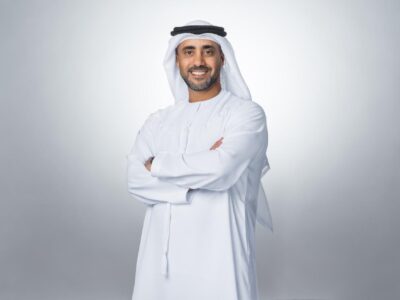
 Justin McGuire, co-founder and CEO – MENA & APAC, DMCG Global
The UAE has introduced a number of measures and policy changes in recent years designed to attract and retain top expatriate talent, including the ten-year visa, retirement visa and remote working visa.
While in January, changes to the Executive Regulation of the Federal Law concerning Nationality were approved allowing investors, professionals, special talents and their families to acquire Emirati nationality under certain conditions.
The country has also relaxed its rules to allow for 100 percent foreign ownership of firms operating outside of free zones, compared with previous requirements of 51 percent local sponsorship.
While in neighbouring Saudi Arabia, the kingdom’s Crown Prince Mohammed bin Salman is driving a strategy to double the size of the capital Riyadh, while in February it was announced the global companies looking to win government contracts will need to relocate their headquarters to the kingdom.
McGuire said the regional war on talent is real and is not a new phenomena.
“To be honest, I think that has been on going on for some time, but it totally depends on the market that you work in,” he said. “If you work in tech, e-commerce, healthcare, or digital content the war is on and has been since the summer of last year. Regional experience is a premium.”
Follow us on

