



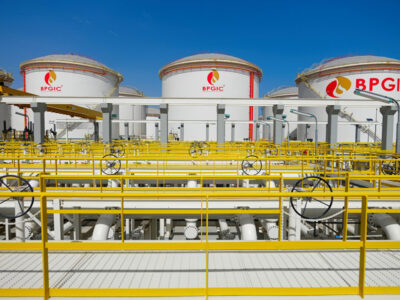

The Dubai Electricity and Water Authority (DEWA) has crossed the 96.5 percent construction milestone on its sea water reverse osmosis (SWRO) desalination plant at the Jebel Ali Power Plant and Water Desalination Complex.
The $244 million (AED 897 million) plant, which will have a production capacity of 40 million imperial gallons per day (MIGD) of desalinated water, is being implemented by a consortium led by Spain’s Acciona Agua and Belhasa Six Construct (BeSIX).
The managing director and CEO of DEWA, Saeed Mohammed Al Tayer, said that the project started water production to the network in March 2021.
Currently, the final finishing works are nearing completion. The project is expected to be fully complete in the second quarter of 2022.
Al Tayer said: “At DEWA, we continue to implement electricity and water infrastructure projects to keep pace with the continuous growth in Dubai and the growing demand for electricity and water. DEWA’s installed capacity of desalinated water is 490 MIGD, with peak water demand reaching 380 MIGD during 2021.
“DEWA aims to increase its SWRO production capacity to 303 MIGD by 2030. SWRO desalination plants require less energy than multi-stage flash (MSF) plants. The desalinated water production capacity will reach 730 MIGD in 2030.”
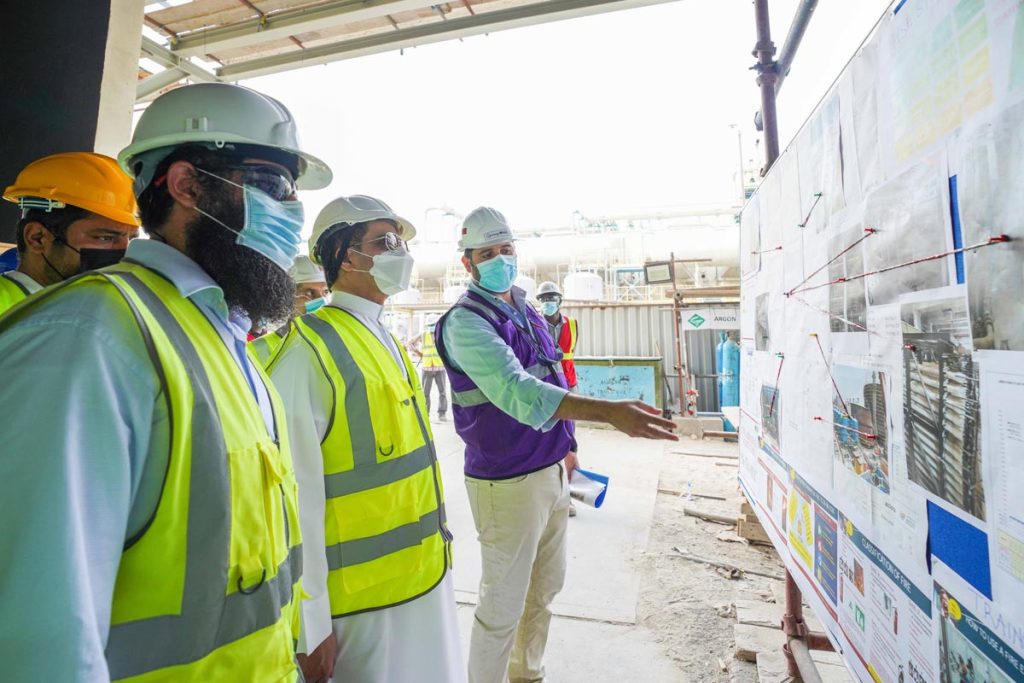
According to DEWA’s strategy, 100 percent of desalinated water will be produced by a clean energy mix that uses both renewable energy and waste heat by 2030. This will allow Dubai to exceed global targets for using clean energy to desalinate water.
“Increasing the operational efficiency by decoupling desalinated water production from electricity generation will save around $3.53 billion (AED 13 billion) and reduce 44 million tonnes of carbon emissions by 2030,” Al Tayer added.
DEWA adopts smart technologies that allow effective desalination plant control and monitoring, thus enhancing availability and reliability.
Eng Nasser Lootah, the executive vice president of the Generation Division at DEWA, said that for the first time, DEWA implemented the dissolved air flotation (DAF) system at the “K” station SWRO plant to pre-treat sea water and remove any pollutants before the desalination process.
This enables the desalination process to continue in all conditions, especially during red tide when total suspended solids and turbidity reach high levels.
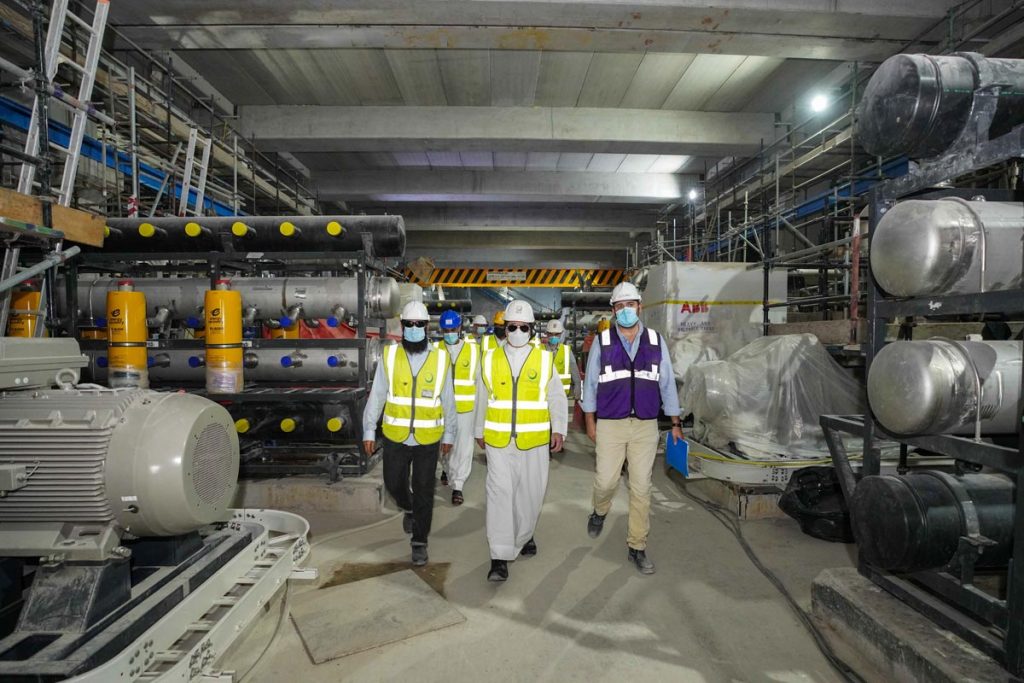
The plant is also equipped with a Dual Media Filter (DMF), which filters and improves the quality of seawater feed, thus increasing the lifetime and performance of the reverse osmosis membranes.
Moreover, the two-pass reverse osmosis system implemented in this project guarantees a high quality of potable water.
The SWRO plant is equipped with recovery devices with a 96 percent efficiency rate. They utilise the high pressure from the first pass brine/reject stream and transfer it to a portion of the feed water stream to the first pass inlet.
This significantly reduces electricity consumption in the high-pressure pump, enhancing the efficiency of the desalination process.
Follow us on

