






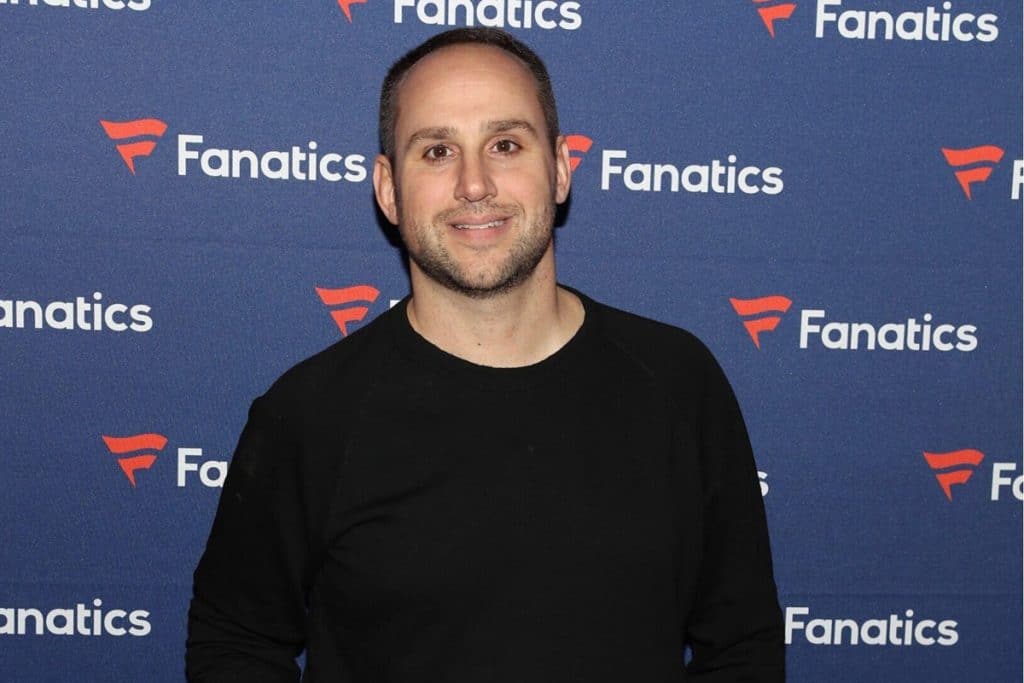
Michael Rubin is in the middle of the sort of winning run that legendary athletes like Tiger Woods and Roger Federer have enjoyed in their prime. He just can’t stop picking up titles.
The 50-year-old American, owner and CEO of Fanatics, is changing sports as we know it. Just this month, Rubin has been named the Businessperson of the Year for 2022 by The Athletic and a few weeks ago, his Fanatics made it to No. 21 in CNBC’s Disruptor 50 List. Last year, Rubin was voted the Most Influential Person in the industry by Sports Business Journal.
Not only is he winning major recognition, Rubin is also making more money than most major sportstars have made through their sports.
The owner of NBA team Philly 76ers is at No. 178 in the Bloomberg Billionaires Index with a net worth of $10.5 billion and his business is now valued at $31 billion, following a round of funding of $700 million earlier this month. Rubin is planning to utilise the money for more acquisitions.
The rise has been fantastic. Three years ago, Fanatics was valued at $4.5 billion, which in itself, is a great number for a company that was launched in 2011, but what the growth it has managed since 2019 is mind-boggling.
So, what is Fanatics? It the world’s largest retailer of officially licensed gear for US sports fans. The Athletic called it ‘the Amazon of sports buying’.
The core business of the Jacksonsville, Florida-based company is to sell licensed professional and college and sports apparel and merchandise. In the past few years, Rubin has expanded into sports collectibles and NFTs, and starting 2023, he is moving into a direct competition with companies like Draftkings, FanDuel and BetMGM with his BetFanatics, his sports betting company.
In 2021, Fanatics became the talk of the industry when it signed long-term licensing deals with the Holy Trinity of American sports – Major League Baseball (MLB), National Basketball Association (NBA) and the National Football League (NFL) and the players union of all three leagues – for trading cards.
Earlier in March, Fanatics raised $1.5 billion, led by Fidelity, Blackrock and Michael Dell’s MSD Partners, to be valued at $27 billion. It is Rubin’s knack of raising funds that has interested many, because the list of investors in that round also included the NFL, the MLB and the National Hockey League (NHL).
Experts have also marvelled at how he has managed to get the trading cards business from Topps, which had a 70-year business association with the MLB. He then took a similar deal to NFL and NBA and its players’ associations and locked them in as well.
At the time, Topps was in the process of raising a $1.3 billion IPO through a SPAC, which had to be scrapped after Fanatics won the baseball deal. Earlier this year, Rubin completed the acquisition of Topps for a throwaway prize of $500 million.
In an interview to New York Times last year, Michael Eisner, an owner of Topps, said: “I respect entrepreneurship, and I respect people who are broad thinkers. I think he (Rubin) will be an entrepreneur to watch in the future.”
Not bad for someone who started his first business of buying and selling old skis from his parent’s house in Philadelphia at age 14 and had to file for bankruptcy soon.
His first retail shop ‘Mike’s Ski and Sport’ could not survive and when his mum and dad finally convinced him to complete his education, he could not survive even one semester at Villanova University. Rubin’s focus was on how he could rebuild his business.
Rubin found his domain in e-commerce when the phenomenon was just catching on in late 1990s. His GSI Commerce tied up with many companies, including Ralph Lauren, for their entire online business. In 2011, he sold GSI to eBay for $2.4 billion.
The year 2022 has been particularly good for Rubin and Fanatics, which now has an enviable database of more than 94 million fans.
Following the Topps acquisition, Rubin purchased Mitchell and Ness, an iconic, century-old clothing brand, in partnership with NBA superstars LeBron James, Kevin Durant, James Harden, comedian Kevin Hart and musician Jay-Z.
In March, Fanatics also struck a long-term deal with WWE to handle its e-commerce business and create new licensed merchandise, trading cards and NFTs.
Later, Fanatics signed a joint venture with Nike, through which it would manufacture apparel for collegiate sports. It also signed Tokyo Giants, Japan’s most popular baseball team.
Fanatics also launched Candy Digital, an NFT and digital collectible company, with exclusive rights with MLB and the MLB Players Association to create digital products around baseball. The new company has raised $100 million in Series A funding, with SoftBank and NFL legend Peyton Manning among investors.
In an interview, Rubin predicted the new betting business could fetch $8 billion in annual profit once it becomes operational in 2023.
With Fanatics getting into so many new ventures, how about its core business? That remains strong despite the inflation and economic concerns.
Consumers continue to buy jerseys and sports apparel despite economic uncertainty, said Matt Powell, a vice president at market research and advisory firm NPD Group Inc, was quoted by The Athletic as saying: “The e-commerce side of the business should continue to be the best part. Assuming the (consumer spending) trend continues, I think the future looks good for licensed sports products.”
At the MIT Sloan Sports Analytics Conference in Boston in March, Rubin said: “We’re thinking about how to build a company that’s beloved by billions of sports fans globally. Valuation just follows the business results.”
Follow us on

