



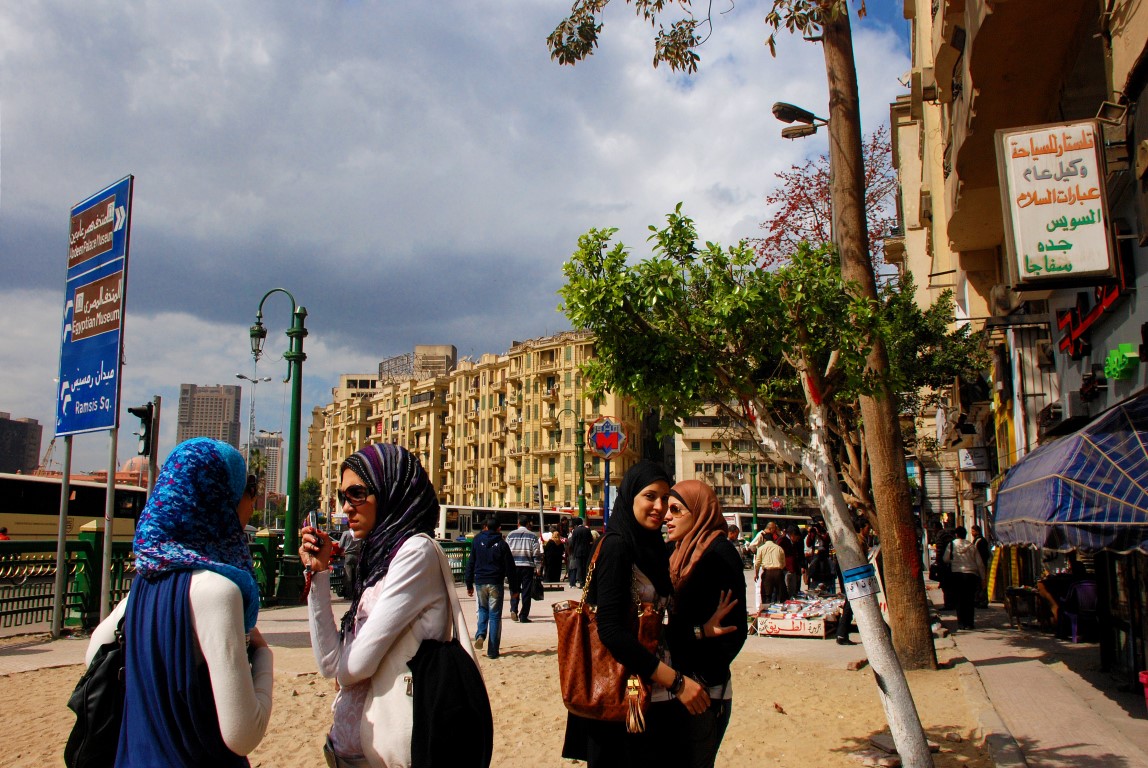
Developing roads, transport networks and street lights that make it easier and safer for women to get to school or work is no new concept, but Egypt is hoping its attempts to map how funding has accelerated equality will drive further investment in development – especially from the private sector.
There is a trillion-dollar gap in sustainable development goals (SDG) financing, that experts are increasingly looking to the private sector to fill. But those low and middle income countries looking to attract private sector investment know they need to create stable and low-risk environments that will ensure investors see returns.
“Of course because the budgets in general are very strict, that’s why alternative sources become important,” Egyptian Minister of International Cooperation Rania Al-Mashat said at a conference in Cairo.
Private sector investors want to see a return, and those returns show up through blended finance, but currently only 1 percent of projects are funded through these mechanisms.
Typical development financing comes from ODA, government budgets, remittances, and foreign direct investment.
“We need to be more inclusive, and there needs to be predictability when it comes to finance,” Al-Mashat said.
To tackle the stability and risk side, Egypt has begun mapping how official development assistance (ODA) contributes to ticking off SDGs. The mapping bolsters stability, but it also ensures investment is made relevant to developing countries’ needs, and shows how funding in one area can have knock-on effects for other SDGs – like infrastructure and transport development on women’s equality.
In 2020, research group RAND recommended to improve lives of women in Egypt, “investments could be made in infrastructure to improve and expand access to transportation, electricity, and broadband internet”.
 Egyptian Minister of International Cooperation Rania Al-Mashat.
Egypt’s ODA-SDG mapping exercise, launched earlier this year, showed how the country’s 377 ongoing development projects, worth more than $25 billion, were impacting its people and enabling its decision-making capabilities by highlighting opportunities and gaps in development cooperation, including financial and technical assistance.
The UN’s Resident Coordinator for Egypt, Elena Panova, said Egypt’s “pioneering” ODA-SDG mapping exercise, carried out by the country on a national level, could become a global practice and support the work done by the Organisation for Economic Co-operation and Development (OECD) to map ODA worldwide.
“We believe [the mapping exercise conducted by the Ministry of International Cooperation] could be replicated in other countries,” Panova said at the Egypt-ICF, during a workshop entitled, ‘Mapping ODA to SDGs: A Tool for Effective Policy Making’.
Follow us on

