




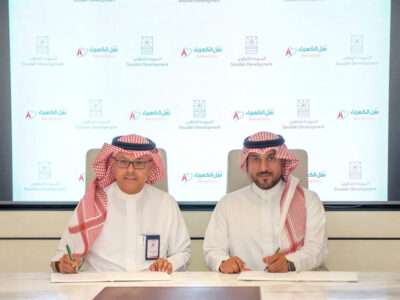
Saudi Arabia has signed a cooperation agreement on the “peaceful” use of atomic energy with Hungary.
The agreement, which was previously signed also with France, South Korea, China, Argentina, Russia and Finland, is part of the kingdom’s efforts to diversify its energy sources to achieve its Vision 2032.
The vision aims to replace 50 percent of dependence on traditional fossil fuel with atomic and renewable energy sources.
The atomic agreement with Hungary was signed by Hashem Abdullah Yamani, president of King Abdullah City for Atomic and Renewable Energy (K.A.CARE), and Miklos Sesztak, Hungarian minister of national development.
“The bilateral atomic agreement is aimed at the enhancement of cooperation between the two countries on the development and utilisation of atomic energy for peaceful purposes,” Yamani said.
Hungary has adopted advanced leading technological industries and the agreement will contribute with technology transfer.
The agreement follows a 2012 accord between the two countries on cooperation in various fields, including cooperation in reactor design, construction and operation, security, waste management and training, and more.
The annual increase in domestic demand for energy ranges now between 6 and 8 percent, whereas the forecasts indicate that the Kingdom will have to increase its generated power by 80 gigawatts by 2040.
Commenting on that, Yamani said: “With such an increase in the local demand for energy … it is of paramount importance for the Kingdom to utilise, in a safe, sustainable and clean manner, the technology of atomic and renewable energy to meet its ever-increasing demand for energy, which will permit us to preserve our hydrocarbon resources for generations to come.”
In a bid to train Saudi engineering graduates in nuclear energy, K.A.CARE recently signed agreement with the International Institute of Nuclear Energy (I2EN), a French government initiative to bring together leading universities and engineering schools to help create responsible development of nuclear energy.
Follow us on

