



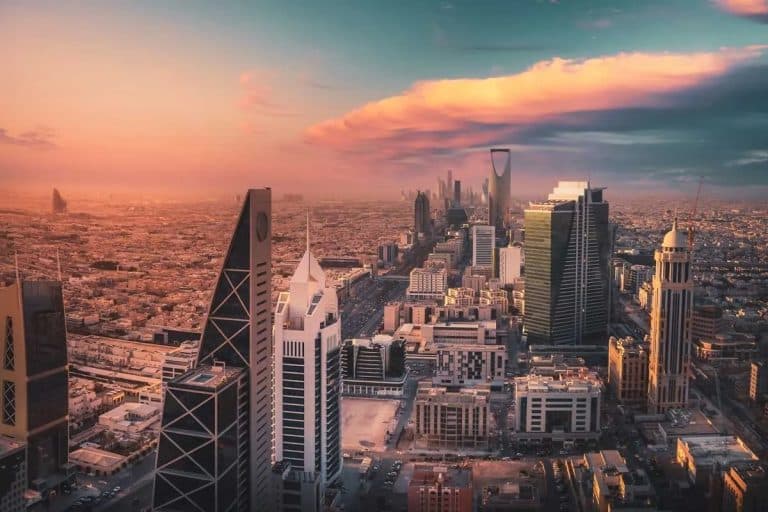
Saudi Arabia plans to expand its hospitality sector by building 320,000 new hotel rooms to cater to surging tourism demand by 2030, a new report by property consultancy Knight Frank revealed.
Currently, 66 percent of existing hotel supply in the kingdom falls into the “luxury, upper upscale, and upscale” categories, the firm said. However, this market segment will expand even further to make up for 72 percent – equivalent to 251,500 hotel rooms.
“With a target of welcoming 150 million visitors by 2030 – a 50 percent increase from its previous goal – the government is actively exploring various strategies to attract international travellers,” said Turab Saleem, Partner and Head of Hospitality, Tourism, and Leisure Advisory, MEA, at Knight Frank.
These strategies include various cultural and entertainment offerings across the country which complement existing attractions such as the Jeddah F1 Grand Prix, Entertainment Seasons, and several theme parks, she added.
Tourism spending during the first half of 2023 rose 132 percent to SAR87 billion compared to 2022. Concurrently, international visitor numbers increased to 14.6 million arrivals (142 percent increase).
Key to this growth has been a massive influx of visitors from Muslim-majority countries. The kingdom welcomed 2.2 million visitors from Bahrain, 1.9 million from Kuwait, and 1.5 million from Egypt.
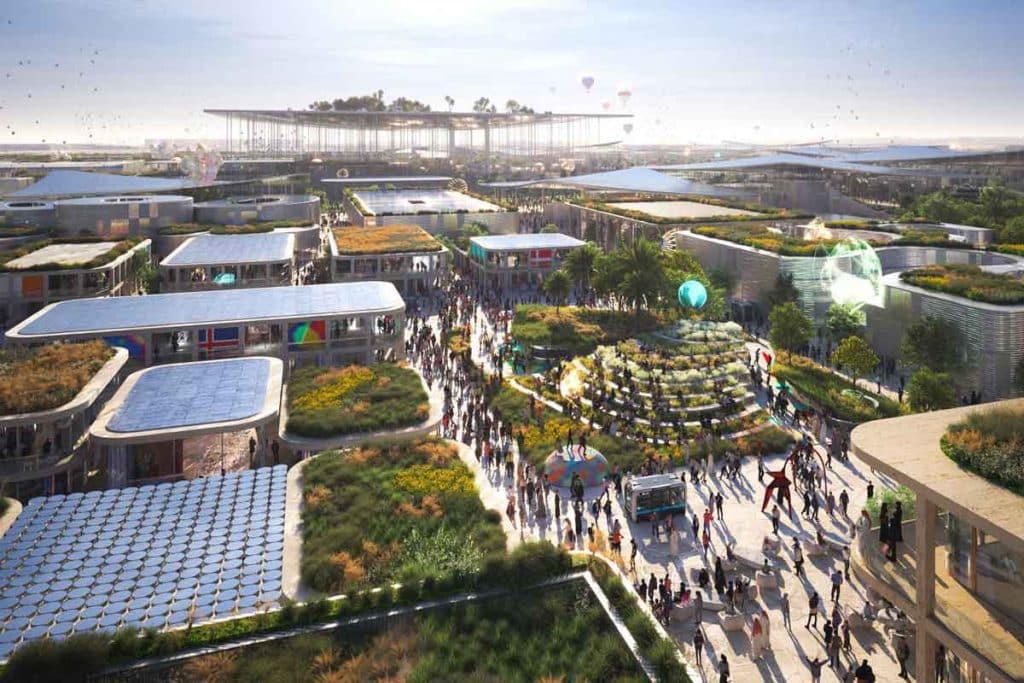
Hosting the 2030 World Expo is anticipated to deliver a major financial increase of more than $94 billion to Saudi Arabia’s economy as Riyadh will welcome an expected 40 million visitors across the six-month showcase event.
This expansion in the kingdom’s hospitality sector underscores the need to provide adequate accommodation for hotel staff.
“Notwithstanding that worker to room ratios in Saudi can sometimes be lower than global averages, the provision of key worker accommodation for the hospitality sector will be essential to ensure its future success,” said Partner – Head of Research for the region at Knight Frank, Faisal Durrani.
“Not only does accommodation of this type help to mitigate against staff attraction and retention issues, but it also creates investment-grade assets. Indeed, elsewhere in the GCC, key worker accommodation can trade for yields of as much as 10 percent, depending on the location, quality, lease tenure, and of course the tenant.”
The majority of planned hotel rooms in Saudi Arabia over the coming years will be categorised as upscale or luxury accommodations, according to the firm’s recent research. Knight Frank found around two-thirds of new supply is slated for 4-star and 5-star properties. Separate data from the World Tourism Organisation observes that hotels in these categories typically staff each room with 1 to 2 employees on average. Using these metrics, it can be estimated the upscale segment may require somewhere in the range of 232,000 to 387,000 key workers to accommodate guests.
The firm also tracked how the top international hotel groups operating in the country may change in the future. By 2030, Accor is projected to move into second place among the largest room operators after previously holding the top spot. Meanwhile, Marriott International is forecasted to have roughly 26,200 keys under management by 2030, making it the biggest hotelier presence in Saudi Arabia.
Religious tourism boost
By 2025, religious tourism is expected to attract 30 million visitors, and the government projects that this figure could rise to 50 million by 2030.

Research into hotel projects and proposals in the Holy Cities of Makkah and Madinah suggests that there are over 221,000 hotel rooms that have been announced, proposed, or are currently under development between the two cities.
“The scale of the Kingdom’s hospitality ambitions is further amplified when you consider the projected development costs. By our calculations, to realise 320,000 hotel rooms, approximately $104 billion will be required, in construction costs alone,” said Daniel Pugh, Partner – Head of Hospitality Valuation & Advisory, MENA.
“The Holy Cities themselves, will need to see spending in the region of $70 billion to develop the expected 221,000 hotel rooms.”
Within Makkah specifically, around 40,000 of these rooms are located in the Masar Makkah area and a further 39,000 are planned for the Thaker Makkah district. Although some portions of the total quantity may not ultimately come to fruition, the sizeable volume highlighted demonstrates the intense scale of development envisioned for these religious tourism hubs.
If realised, the room counts would make up approximately 24.7 percent of the nation’s expected total hotel stock by the year 2030.
Follow us on

