




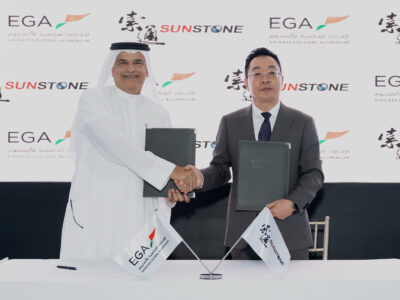
Abu Dhabi could soon become one of only four cities in the world to host international sport-related legal disputes after a memorandum of understanding was signed with the Court of Arbitration for Sport (CAS).
The new CAS base could see the UAE capital become a regional hub for sports-related disputes, similar to Dubai’s position in hosting international financial disputes at the Dubai International Financial Centre (DIFC) courts.
CAS is recognised as the top international dispute resolution mechanism for legal cases relating to sports and is independent of any sports organisation.
Headquartered in Switzerland and with operations in Sydney and New York, CAS hears any dispute relating to sport, including commercial (eg. Sponsorship or a player’s contract) and discipline (eg. Doping, missing a game) cases. It also acts as an appeals court for decisions made by sporting organisations’ own arbitration systems, including global associations such as FIFA and the Olympics.
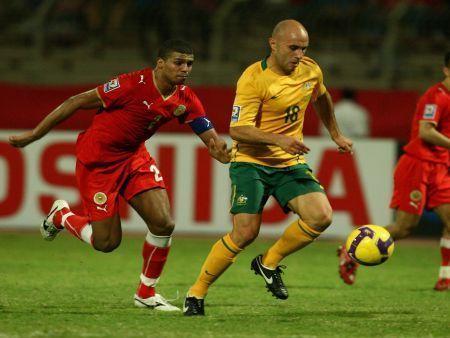
It is presently hearing a case brought by Qatari football team Al Gharafa and Australian football player Mark Bresciano, who are appealing against a decision by the FIFA Dispute Resolution Chamber in favour of the UAE’s Al Nasr Sports Club.
Al Nasr initiated legal action after Bresciano transferred to Al Gharafa while still under contract with the UAE club.
The FIFA Dispute Resolution Chamber ordered Bresciano and the Qatari club to pay €1.377m euros ($1.87m) to Al Nasr Sports Club and banned Bresciano from playing professional football for four months.
The Qatari club also was banned from registering any new players, either nationally or internationally, for the next two registration periods.
The club launched an appeal at CAS in Switzerland as well as a request to stay the FIFA orders until the CAS hearing was completed. CAS rejected the stay of execution. It is expected to make its judgement on the appeal within three months.
The launch of a CAS court in Abu Dhabi will mean cases such as that between the Al Nasr and Al Gharafa football clubs could be heard in the UAE rather than Switzerland, saving costs.
Saleh Ahmed Alobeidli, senior associate at one of the Middle East’s largest law firms, Al Tamimi & Co, which has recently launched the region’s first sports law practice, said sports-related disputes were becoming more common in the Gulf with the rise in popularity of sports participation and sporting events.
Europe, the Middle East and Africa are the second largest sports market in the world, worth an estimated $42.8bn in annual revenues and growing at 4.6 percent annually.
Al Tamimi & Co considers the Middle East to be “the prime emerging sports market”.
Numerous international sporting events have popped up in the past decade, including in golf, tennis, swimming, horseracing and rugby, as well as the F1 in both Abu Dhabi and Bahrain, international cricket tests and the Qatar World Cup in 2022.
Alobeidli said the region was still maturing when it came to sports-related dispute resolution.
“There are a lot of challenges in the market as it’s a very new area in our region, so it’ll need lots of efforts to challenge the way sports business is being conducted,” he said.
The increased value of sport also has led to more sports-related disputes as sponsors, clubs, players and broadcasters attempt to protect contracts worth millions and sometimes tens of millions of dollars.
“The value [of sport] has increased dramatically so if a club paid $10m, $20m, $30m [for a player] they’ll keep fighting,” Alobeidli said.
The Abu Dhabi CAS could hear disputes from sporting organisations around the world, Alobeidli said.
“Once it’s there it will be considered like the hub for Middle East dispute resolution, before CAS [headquarters].
Follow us on

