




Middle East airline traffic increased 3.1 per cent as global demand for aviation continued to increase in February, according to International Air Transport Association (IATA).
IATA released data for February 2025, showing increased passenger traffic across the world.
According to the data, total demand, measured in revenue passenger kilometres (RPK), was up 2.6 per cent compared to February 2024.
IATA reveals airline traffic growth
Total capacity, measured in available seat kilometres (ASK), was up 2 per cent year-on-year. The February load factor was 81.1 per cent (+0.4 ppt compared to February 2024).
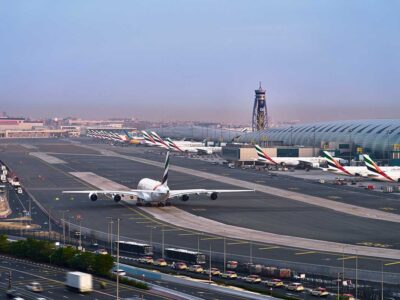
Middle Eastern carriers saw a 3.1 per cent year-on-year increase in demand. Capacity increased 1.3 per cent year-on-year and the load factor was 81.9 per cent (+1.4 ppt compared to February 2024).
International demand rose 5.6 per cent compared to February 2024. Capacity was up 4.5 per cent year-on-year, and the load factor was 80.2 per cent (+0.9 ppt compared to February 2024).
Domestic demand fell 1.9 per cent compared to February 2024. Capacity was down 1.7 per cent year-on-year. The load factor was 82.6 per cent (-0.2 ppt compared to February 2024).
Willie Walsh, IATA’s Director General, said: “While traffic growth slowed in February, much of this can be explained by factors including the leap year, and lunar new year falling in January compared to February last year.
“February traffic hit an all-time high, and the number of scheduled flights is set to continue increasing in March and April. But we need to keep a close eye on developments in North America, which saw falls in both domestic and international traffic.
“The recent shut-down of Heathrow reminded us once again that the current passenger rights regime in place in Europe and the UK is not fit for purpose. The annual costs of compensation, care and assistance run into the billions.
“Thankfully, the Polish Presidency of the EU has recognised that this is a drag on European competitiveness and is progressing much-needed and long-anticipated reforms to EU261.
“While many of the proposed reforms are sensible, the package stops short of a real solution. Even with the reforms, EU261 will still target the airlines with penalties even if the root cause of delays is an infrastructure incident out of their control—like we saw at Heathrow.
“Over two decades of EU261 have not seen a reduction in delays because infrastructure providers have no incentive to improve their game. Sadly for European travellers, we are likely to see this play out again in this summer’s peak travel season. Genuine reform of EU261 must ensure that all parties responsible for delays have a stake in the consequences”.
Follow us on

