


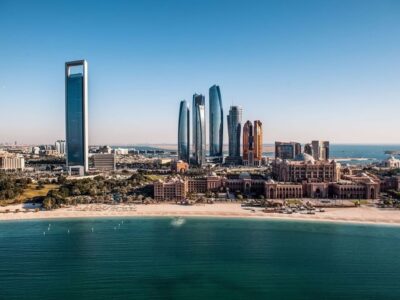


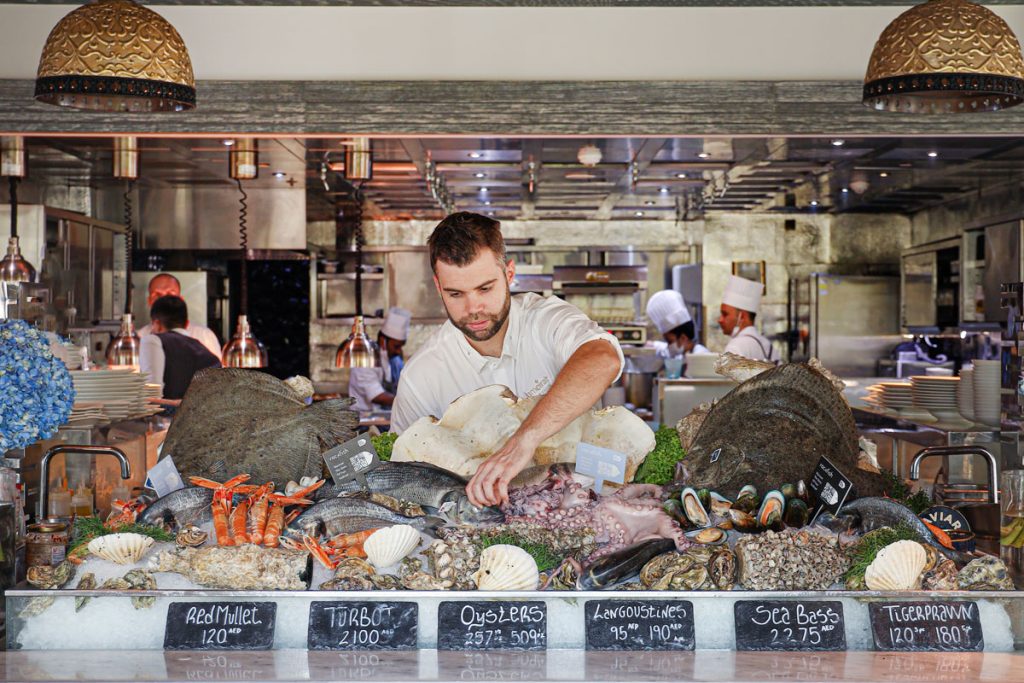
Dubai-based start-up Seafood Souq is digitising the seafood supply chain to make it more transparent and traceable – and they’re partnering with hotel giant Jumeirah Group to first bring their track and trace technology to Rockfish restaurant at Jumeirah Al Naseem.
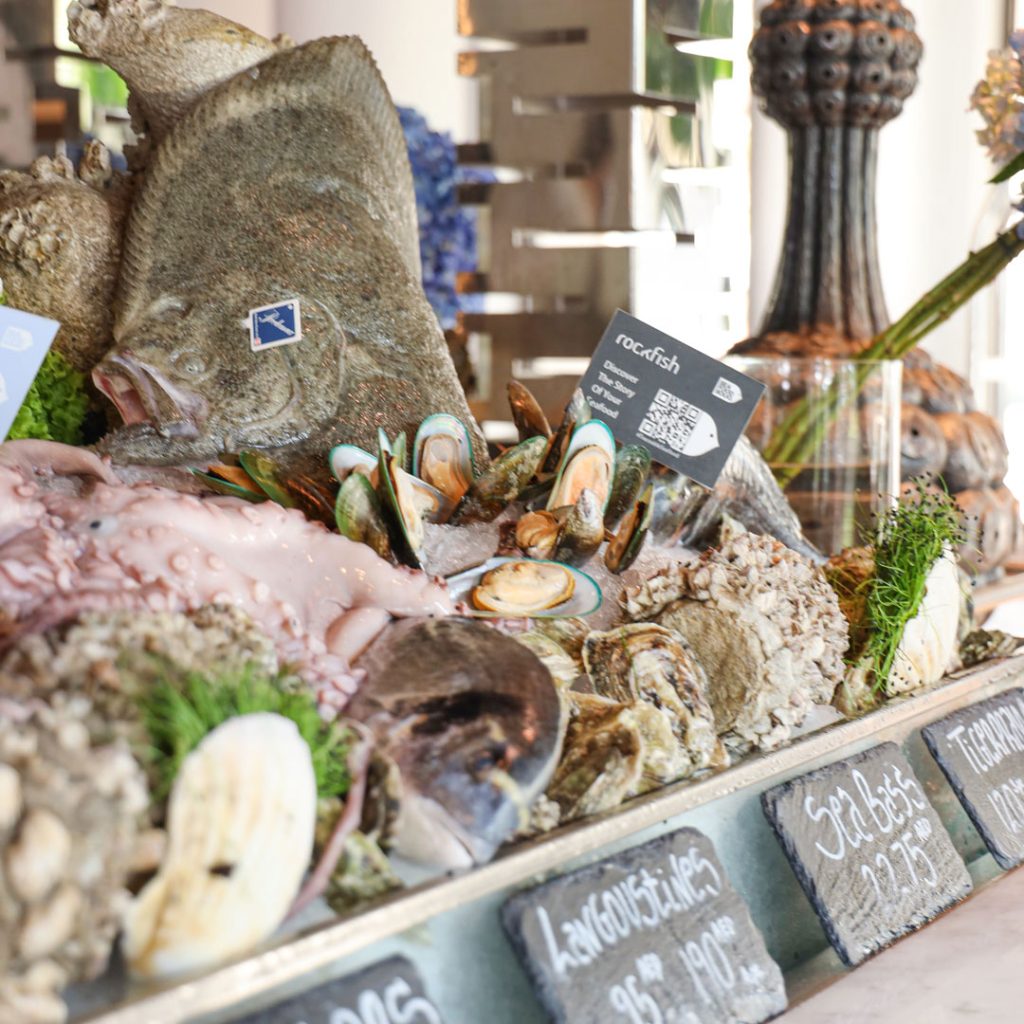
Ultimately, diners will be able to scan a QR code showing how their fish ended up on their plate across Jumeirah Group’s Dubai restaurants.
Arabian Business talked with the team behind the technology, Abdulhameed Al Beiruty, head of product at Seafood Souq; and Osama Al Muqbel, chief technology officer. They, alongside marketing head Sophie Hunter-James, told Arabian Business how the partnership with Jumeirah Group came about, how the technology works, how they see it evolving to potentially incorporate the Internet of Things, and where they see Seafood Souq in the next five years.
Hunter-James: Our partnership with Jumeirah resorts was formed on the basis of a joint mission for sustainability that will see Jumeirahs’s Rockfish restaurant at Al Naseem become the first restaurant in the region to have certified traceable seafood implemented across its menu using our tech product SFS Trace, with the aim to roll out across the wider Dubai restaurant portfolio next year.
This partnership is a step towards our mission to provide traceability to end consumers globally, with one-in-five seafood products being mislabelled, seafood fraud is rampant and results in consumers eating wrong species, fish that isn’t fresh, endangered species, fish that is damaging to our health or that is sourced from illegal, unreported and unregulated fishing or unsustainable methods.
With the UAE being one of the largest seafood consumers globally per capita, and for us being a home-grown tech company here, it made sense to position our initial SFS Trace launch here in the UAE with Jumeirah Resorts.
How does the tech work? Walk me through it.
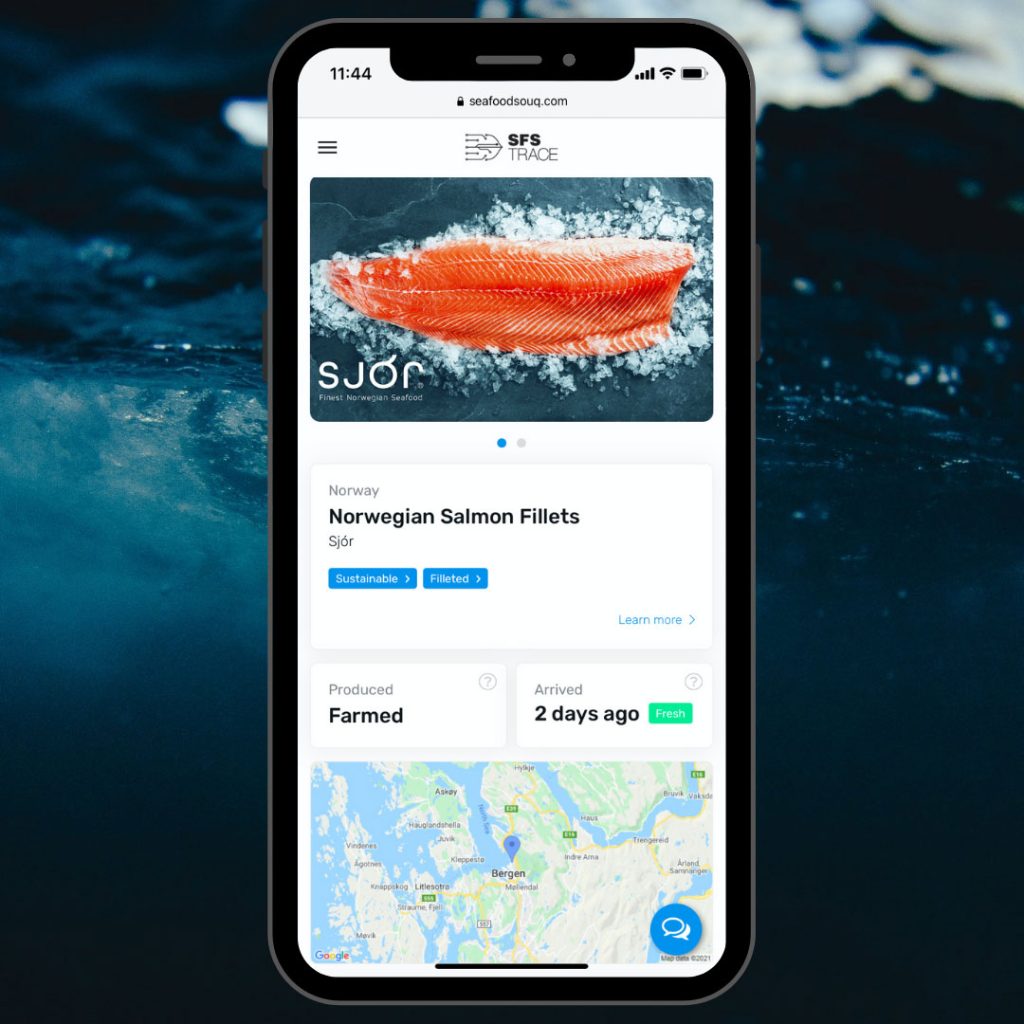
Al Beiruty: SFS Trace is a proprietary algorithm that, through a private network and database, captures and aggregates data across the supply-chain from when the fish was harvested (in the case of aquaculture) or caught (if wild-captured.)
Due to our strong relationship and integration with our partners and the value chain the product has to go through, we are able to capture detailed data and information about the product. This data is collected and presented to the end consumer by scanning a QR code showing them information that has never before been available to customers in restaurants.
Why is it important that businesses introduce this feature?
Al Beiruty: The goal of SFS is to be a step in the right direction in stopping food fraud and guaranteeing the customer the highest quality of product.
For restaurants, having SFS Trace attached to their menu shows their commitment to sustainability by providing this added service to their customers where they can see exactly where their fish comes from and when it was harvested.
The big picture here is to stop overfishing and the exploitation of our natural resources. This can only be achieved through capturing accurate data on the seafood industry and the supply chain.

What were the most challenging parts of developing the algorithm?
Al Muqbel: We are heavily focused on end-to-end supply chain traceability from source-to-plate, aiming to cover each step including harvest/catch, processing, logistics, and last mile.
All the seafood producers listed on our online marketplace provide a lot of information on harvest, catch dates, species and processing once the batch is confirmed for order – we also have oversight on first mile, middle mile, last mile and processing in country of destination.
Where SFS Trace really stands out is that it is inherent to our business model – any product sourced via our marketplace is processed with this algorithm so it’s not a value add product that costs the end buyer or consumer any extra.
The main challenge with developing this technology so far was in unifying the data provided by different stakeholders along the supply chain.
With the wide variation of data collected and CTEs (critical tracking events), as well as the legacy systems and processes that the industry has adopted in the past two decades, made us realise that SFS Trace has to be adaptable and flexible in a way where two products might have different levels of traceable data (for example wild-caught vs aquaculture, fresh vs frozen) and with this mindset we developed the first iteration of trace to be able to handle different data and variable data sources.
What comes next? How do you see the tech evolving as the business grows?
Al Beiruty: Our plan for SFS Trace is to make it more automated and more integrated into the global seafood supply-chain. This will be achieved through onboarding more suppliers and capturing more data from the different steps along the value chain.
We also hope to integrate better with local fishermen around the globe for their wild-caught product.
We are exploring IoT devices, tagging fish on vessels, smart baskets and much more. This is just the beginning of our journey. We are very proud to have partnered with the Jumeirah group and our relationship will only grow as we expand into more restaurants and get feedback from our customers.
What other ways could this technology be used?
Al Beiruty: As Seafood Souq, we are very committed to the seafood industry and see it as a big challenge in itself so our primary focus on building seafood traceability and collecting data that we can use to ultimately provide a sustainable way to continue seafood consumption.
In terms of where this technology can be applied, literally everywhere. There are other companies globally working on traceability for meat, honey, fruits and vegetables and much more.
Where do you see Seafood Souq in the next five years?
Al Muqbel: As a tech player in a legacy industry where sustainability is a core to our future food security and the wellbeing of our oceans, Seafood Souq plans to build a digital ecosystem of products and services to help elevate the dynamics of how seafood is traded and create trust between all the parties involved in the process.
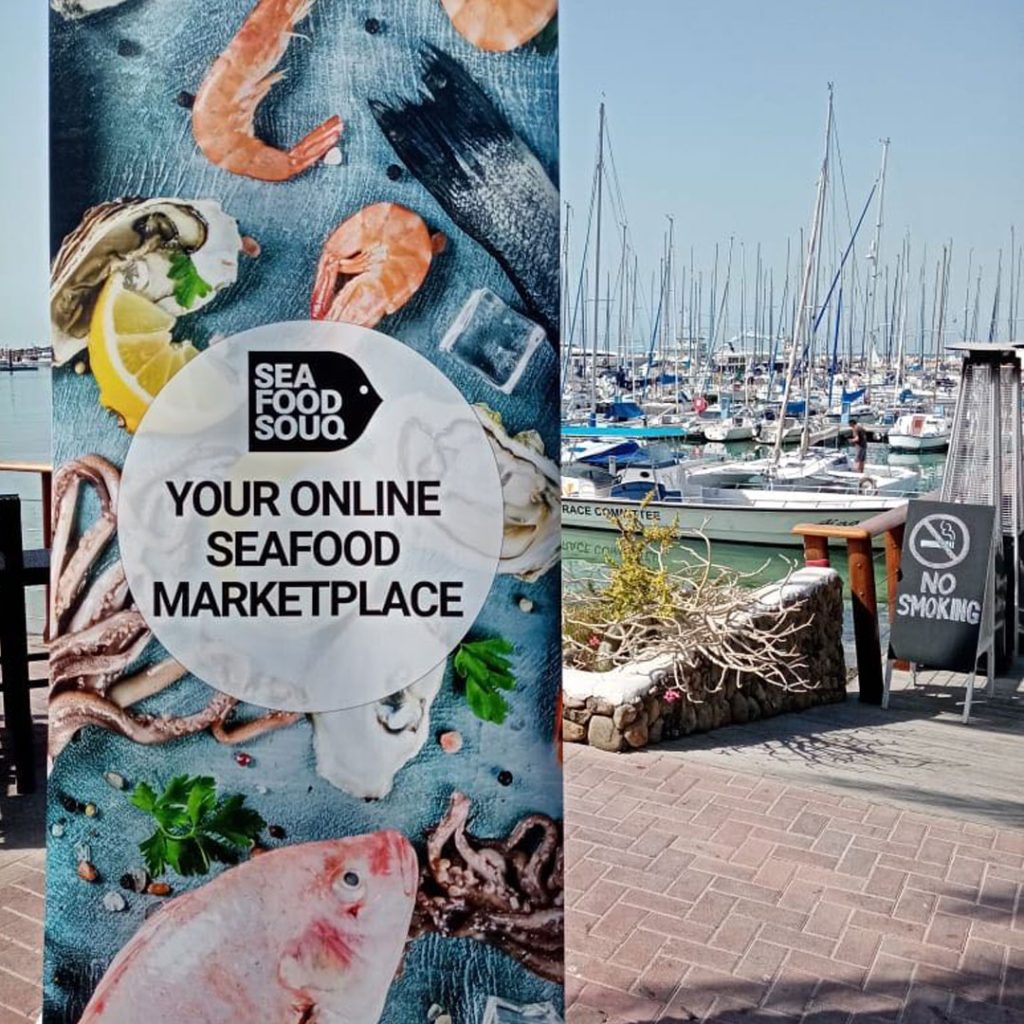
We aim to build a global platform for seafood trade where we have a network of integrated stakeholders along the supply chain. The platform will be powered with data in its core. The data is collected on each product ordered from the moment of harvest until it reaches the end consumer. This will help us predict demand and feed back the information to seafood producers for better planning and resource management which translates back to more responsible fishing activity and less wastage.
In addition, and as part of the digital ecosystem, Seafood Souq will provide buyers globally access to approved sustainable fisheries, seafood producers, aquaculture and fisher associations. The platform will also offer services to handle payments, logistics and product processing to ensure the supply chain is intact and monitored from start to end.
To achieve this long-term vision, we are collaborating with industry leaders, NGOs and governments to build and adopt a standard for traceability. We are currently on the advisory board of GDST (Global Dialogue for Seafood Traceability) and working on adopting the traceability standard that will enable deeper integrations with stakeholders, unified data and communication language, and as a result a better and more transparent traceability data passed to the end consumer.
Follow us on

