



There is only a fleeting moment during our two-hour conversation when James Hogan is lost for words.
“I actually don’t know. I really can’t tell you,” he says. Who can blame him for coming unstuck, when asked how many countries in the world he has visited?
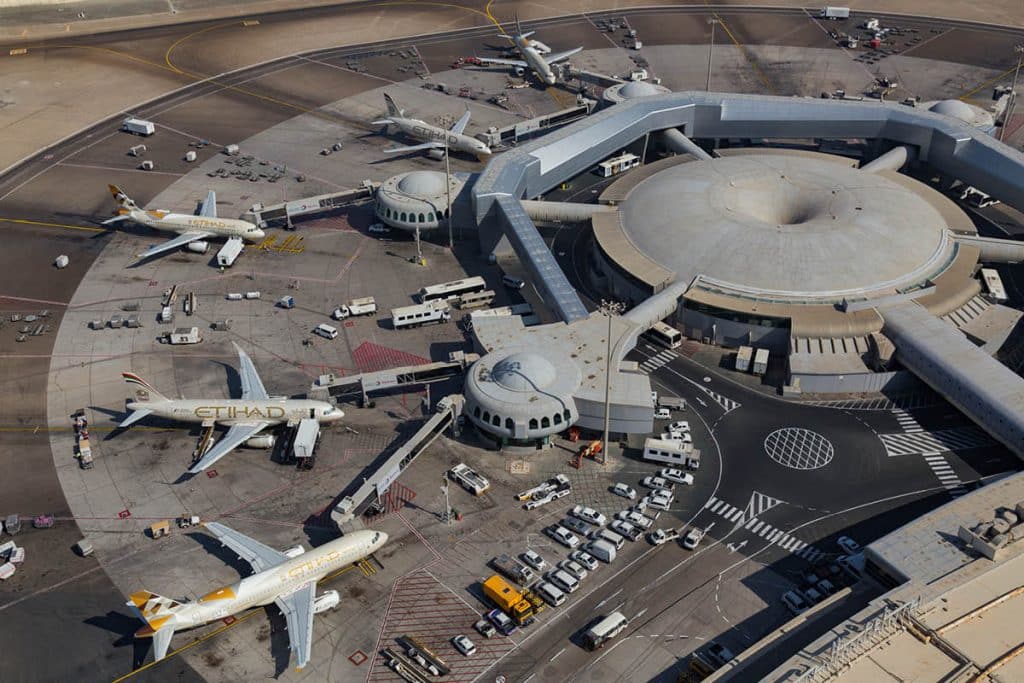
When it comes to aviation, tourism and hospitality, the world has seen fewer bigger and better stars. You name it, and the chances are Hogan has not only done it but run it. Over an 11-year period from 2006, he transformed Etihad Airways from a $300 million startup into a $20 billion global travel and tourism group.
From 2011, he delivered the shareholders five consecutive years of audited profit, whilst also earning the airline a reputation for having one of the industry’s best customer services and experiences. In 2010, The Economist hailed Hogan’s super connectivity plans as being “bad news for competitors but good news for passengers.”
Since stepping down five years ago, Hogan has been running Knighthood Global, which he set up to offer business advisory, capital restructuring, and investment services in aviation, hospitality, tourism and real estate.
There have been no shortage of corporate giants and governments keen to talk to Hogan – but Hogan himself doesn’t do much talking when it comes to the media. This is his first interview in five years, and it’s taken – well, around five years – to persuade him to do it.
“Let’s just say I’ve been busy,” he says, adding: “Aviation never sleeps, and actually, not even during the pandemic.”
He may be 66 years old, but Hogan – who divides his time between Geneva, London and Abu Dhabi – looks as energetic as ever. Sitting still, as colleagues will tell you, even on a 12-hour long-haul flight, is just not in his nature.
The industry today is of course very different to the one Hogan left behind when he departed Etihad. In January 2021, the Aviation: Beyond Borders Report forecast a loss of 46 million aviation-supported jobs globally due to the Covid-19 imposed shutdowns.
Closed borders, parked planes, empty skies. Who could have imagined such a scenario? Well, actually, Hogan is more circumspect. Nobody saw Covid coming, but the smartest airline bosses always plan for the biggest crisis.
“One of the challenges in operating any airline as CEO is every day is different, and over the years, I’ve been exposed to wars, to pandemics, to financial crises. Airline CEOs have that awareness and capability to tackle crisis. That’s part of the job. Yes, it was one of the worst long-term shutdowns.”
He adds: “People took a different approach to the crisis, but I knew the market would come back in time, I had no doubt, because that’s the nature of aviation, it’s mobility. The consumer will come back and what we are seeing now is the rebound.”

But, he stresses: “You must remember that it wasn’t a 100 percent global shutdown. Carriers took different positions. Some continued to fly, some restructured their businesses, their fleet deals, their union agreements. But I had no doubt the market would come back in time.”
So, has it fully come back? “I think capacity is back to about 70 percent of where it was, full fleets are not back in the air. In some cases, key staff were let go, you need to rehire, retrain. It also depends on what type of service you are. It depends on how you tackle the challenge. But let’s not kid ourselves, it’s been a tough road for many people.”
The future definitely, finally, is starting to look bright. Carriers in the Middle East are set to expand their fleets with an additional 2,980 commercial jets in the next two decades, major supplier Boeing said in September.
The new planes will be required to meet the strongly recovering demand for both passenger and cargo airplanes, according to Boeing.
Middle East airlines are expected to spend around $765bn to get the additional jets – more than two-thirds of which will be new deliveries, while the remaining will replace older models.
The fleet forecast comes as Boeing also expects a 4 percent growth in passenger traffic annually – after the Covid-19 pandemic almost completely shut down the aviation business around the world.

Hogan is also bullish about the region. “I think the Gulf carriers have been great connectors – when you look at a full service airlines like Etihad with a strong destination relationship. When you look at the Gulf and you can fly nonstop to most places in the world, that’s what has been so exciting about these carriers. The Indian subcontinent is extremely important to Gulf carriers, so is Europe especially Germany.”
He adds: “When you look at what’s happening in Saudi Arabia, and the World Cup in Qatar, that’s good for everybody because that puts a snapshot on the region going forward as more than just a connector. Dubai is a good example of a destination in its own right, and the same in Abu Dhabi. So instead of just through traffic you are getting point to point traffic and the average yields on point to point are greater than the transfer traffic. If I look at the region, I am very bullish about the next 20 years and how the region continues to evolve.”
Hogan’s 20-year outlook may sound lengthy to say the least, but, he says, that is the nature of the industry. “It’s not like a supermarket where you can just walk in a buy what you like. If you are looking at new efficient next generation aircraft from Boeing and Airbus you have to have that roadmap 20 years out and you need to acknowledge that you are going to have shocks along the way.”
If the Gulf is where the action is right now, Hogan’s global outlook for the industry very much points to India for the excitement. After decades of losses, the Indian government approved the privatisation of Air India in 2017, but it was only a year ago that the full effects of ownership by Tata Sons began to take shape, including the appointment of a new CEO. That, says Hogan, is the market to keep a close eye on.
“One of the most exciting opportunities is the restructuring of Air India with the Tata Group. This is a huge market but with astute travellers, very proud people. You have to earn their business. If I was looking at a threat, it could be an invigorated Air India. If Air India can meet the people standard and product standards on the three
Gulf carriers, they are going to be a major player.”
Elsewhere, Hogan points to impressive consolidation of airlines in the US market, with strong distribution networks. Africa, he says, still faces challenges when it comes to aviation policies, but the market is “unique”. “It can still be opened up. Africa has issues on support, regulation and funding but when they overcome them, and we look 20 years ahead they have a strong future.”
Other regions like Latin America and China also offer “strong opportunities.” And he sees commercial supersonic flights being an integral part of the aviation industry over the next two decades. American carriers have already taken orders for the Boom supersonic planes – don’t be surprised to see Gulf carriers do the same.
But, when it comes to Hogan, it isn’t just his unique industry insights that make him stand out from the crowd. As everyone who has ever worked with Hogan will testify, it is his absolute dedication – some would say healthy obsession – with customer service – that really sets him apart.
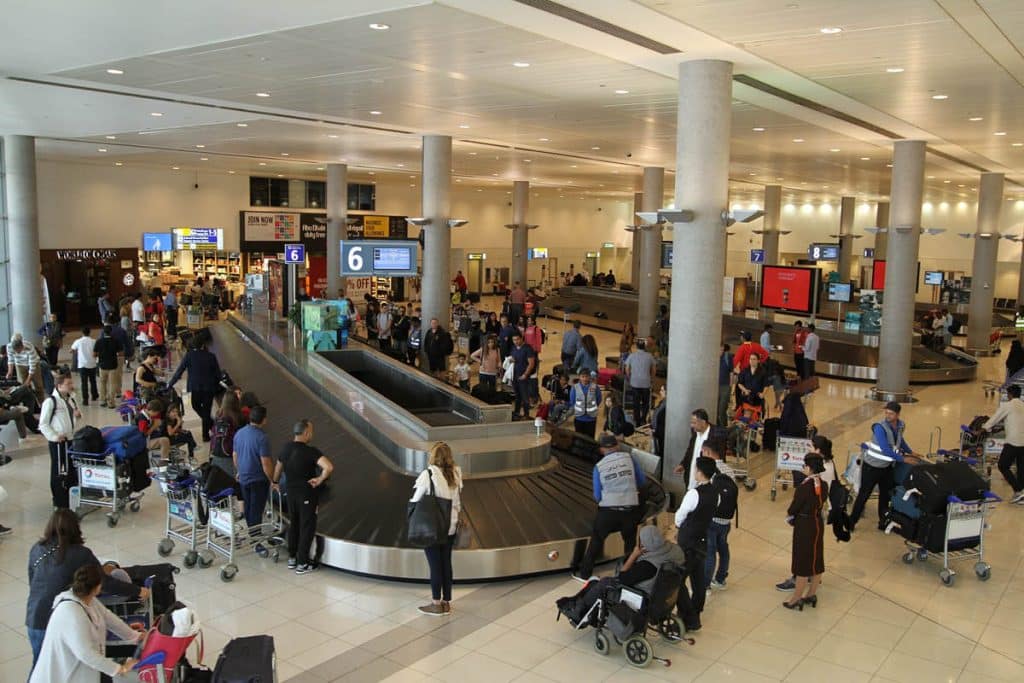
“The customer is king. How you go the extra yard for your guest can differentiate between airlines, especially now in a digital society. Coming out of the pandemic, customers can go online and source and validate the proposition. The traveller post pandemic has become much more savvy. People are reassessing their quality of life. When they look at how they spend their money they are being much more discerning,” he says.
But how can airlines achieve the standards he was famous for setting at Etihad? “People who know me know I’m a great believer in people. I played a lot of sport, Australian rules football, and I take the analogy of sport into business. You have to build a team and a common goal. In my time at Etihad I took a very small business and built it into one of the best brands in the world. From day one I was very focused on people. The way you build a team, the way you communicate, how you reward and acknowledge great work. I think it comes down to leadership.”
Hogan has certainly had his fair share of leadership. He started his career in 1975 at Ansett Airlines in Australia as an airport officer and says he “always knew” he would one day be a CEO. Hogan climbed the ladder to eventually hold senior positions at British Midland International, Hertz Corporation, Forte Hotels and Gulf Air.
Does he miss it? Would he do it again? “I’ve been associated with Abu Dhabi for over 20 years. One of the most exciting mandates I was ever given was by the shareholders to move forward with a very clear mandate on building Etihad Airways. That was an exciting time, it was part of the 2030 vision and a very clear roadmap. To be able to build an airline from scratch as we did and bring together a team of outstanding people from all around the world, to create connectivity alongside two very serious players. To be seen at a point in time as one of the best airlines in the world, that’s pretty hard to beat.”
It’s often forgotten that Hogan did a lot more than just build an airline. Etihad’s growth helped turn Abu Dhabi into a destination city. Thousands of jobs were created as a result. The airline, under Hogan, became an innovation machine: its Emiratisation programme, its graduate training programme, an all-female call centre in Al Ain, US immigration pre-clearance in Abu Dhabi, and even a penthouse on the A380.
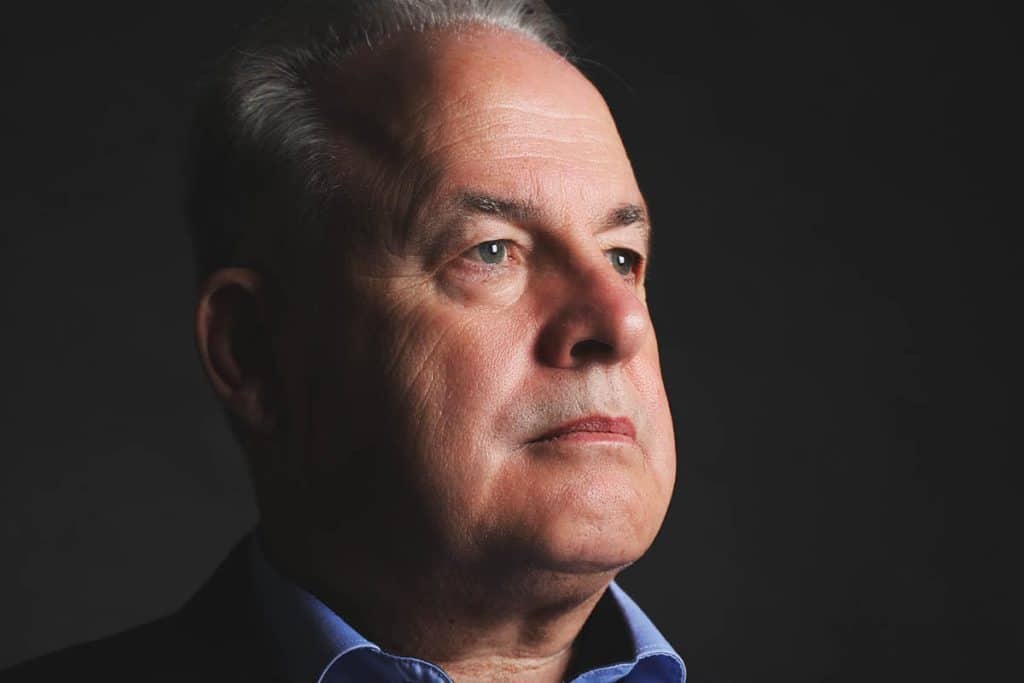
Today, Hogan works with several government-owned airlines in Europe, Africa and the Caribbean, providing restructuring advice. Whether it’s building an airline that can support tourism, or setting out a roadmap to privatisation, Hogan and his team of experts at Knighthood Global are fast becoming known as The A Team of aviation. No problem they face cannot be solved.
I end by asking him if he can tell a lot about an airline – its condition, its service, its prospects – the moment he boards.
“I can tell you when I walk into the airport,” he says.
With that, he heads off to Abu Dhabi Airport for a flight back to Switzerland. It’s a six-hour flight, but the only thing certain is that he won’t be sitting still for very long.
Follow us on