


2021 will probably be remembered globally as the year the world fought back against the ongoing impact of the coronavirus pandemic.
But in the UAE, the pandemic spurred the announcement of major projects to boost economic performance as it rolled out one of the most effective vaccine programmes in the world.
The drivers of the UAE’s economy in 2021 included five key pillars, including the launch of an industrial strategy worth AED300 billion, the start of trading in Murban crude oil, the launch of the first projects of the Projects of the 50, Expo 2020 Dubai and the announcement of President Sheikh Khalifa bin Zayed Al Nahyan of the most significant legislative reform in the country’s history.
The UAE’s non-oil foreign trade achieved a growth of 27 percent in the first half of 2021 compared to the same period in 2020.
Preliminary official data indicated the country’s non-oil foreign trade was valued at some AED900 billion in the first half of 2021, while its non-oil exports increased during the same period to AED170 billion, achieving a growth of 44 percent compared to the first quarter of 2020.
2021 also saw the UAE advancing in global competitiveness indexes and the announcement of major investment projects and strategic plans to achieve sustainable development across multiple sectors.
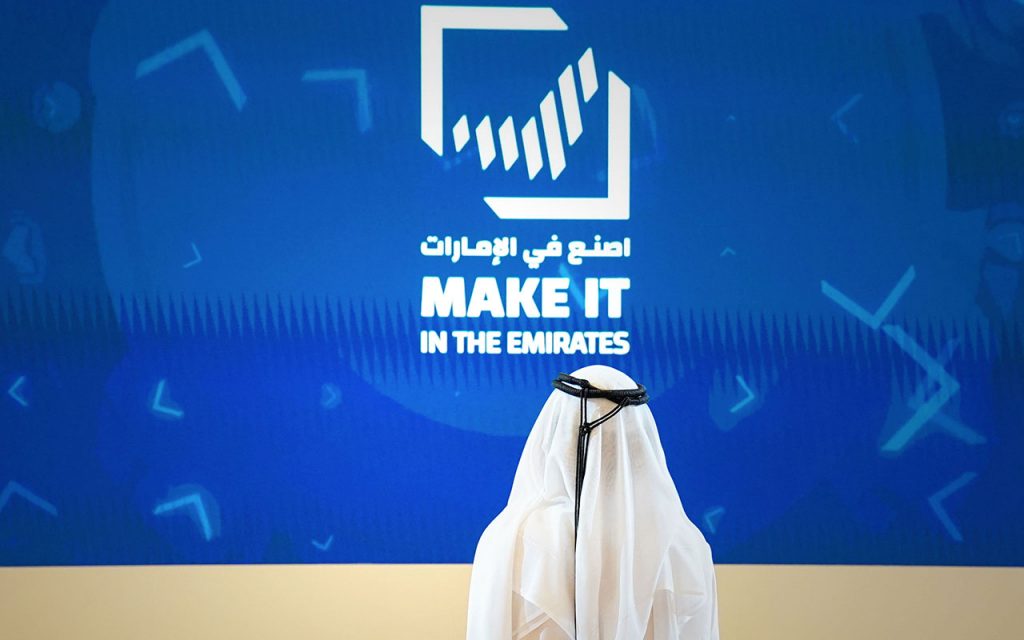
In a new report, UAE state news agency WAM highlights the key economic and investment projects of 2021, when the UAE also announced plans to double the country’s investments and value of foreign trade.
Despite the persistence of Covid-19 pandemic, the UAE is expected to see a real GDP rise of 2.1 percent in 2021, supported by the growth of non-oil GDP of 3.8 percent, according to the Central Bank.
The UAE’s national carriers – Emirates, Etihad Airways, Flydubai, Air Arabia, Wizz Air Abu Dhabi and Air Arabia Abu Dhabi – have also rebounded from the impact of the pandemic, managing to restore flights to nearly 500 destinations across 110 countries.
The UAE also topped 152 global indexes, and ranked in the world’s top five countries in 274 indexes.
Key economic plans announced by the UAE in 2021 included the 300bn industrial strategy to boost the sector’s contribution to national GDP to AED300 billion, compared to the current AED133 billion.
It also revealed a plan aimed at doubling foreign trade value to AED3 trillion during the same period, an increase of AED1.5 trillion while also investing nearly AED600 billion in renewable energy to achieve climate neutrality by 2050.
The country’s economic objectives also included generating economic proceeds amounting to AED200 billion through the UAE Railway Programme, increasing the contribution of the National In-Country Value Programme from AED22 billion to AED55 billion by 2025 and doubling foreign investments in the country to AED1 trillion in nine years, an increase of AED550 billion.
The country also plans to achieve an annual increase of AED45 billion in exports across 10 foreign markets through 10×10 Programme.
In September, the first set of initiatives of the Projects of the 50 was launched and included the 10×10 programme which aims to boost exports to China, the UK (pictured), the Netherlands, Italy, Russia, Poland, Luxembourg, Australia, New Zealand and Indonesia.
The project aims to achieve a 14 percent growth in cumulative foreign direct investment (FDI) outflow by 2030, as well as 24 percent growth in FDI directed to the targeted countries by 2030.
An e-portal, Invest.ae, was also launched to serve as a hub for all investment-related local entities, enabling them to showcase all investment opportunities across the UAE.
The UAE also announced the Emirates Investment Summit, scheduled to take place during the first quarter of 2022 to build lasting partnerships between the public and private sectors.
The UAE also unveiled a global economic campaign, United Global Emirates, to promote the country as a major hub for business, talent and foreign investment.
In October, the Ministry of Industry and Advanced Technology signed agreements with 12 industrial entities to form the Champions 4.0 Network, which aims to kickstart the newly-announced Fourth Industrial Revolution programme, known as UAE Industry 4.0.

In November, President Sheikh Khalifa bin Zayed Al Nahyan amended over 40 laws to enhance the country’s economic environment and investment infrastructure.
The amendments included the development of a legislative structure that includes laws covering the investment, commercial and industrial sectors and companies, along with the regulation and protection of industrial property, copyright, trademarks, commercial register, electronic transactions and trust services.
They also include a law on the entry and residence of foreigners and unified provisions of working conditions, in addition to laws related to community security, such as the the Crime and Punishment Law, the Online Security Law, and laws regulating the production, sale and use of narcotics and psychotropic substances.
Follow us on

