





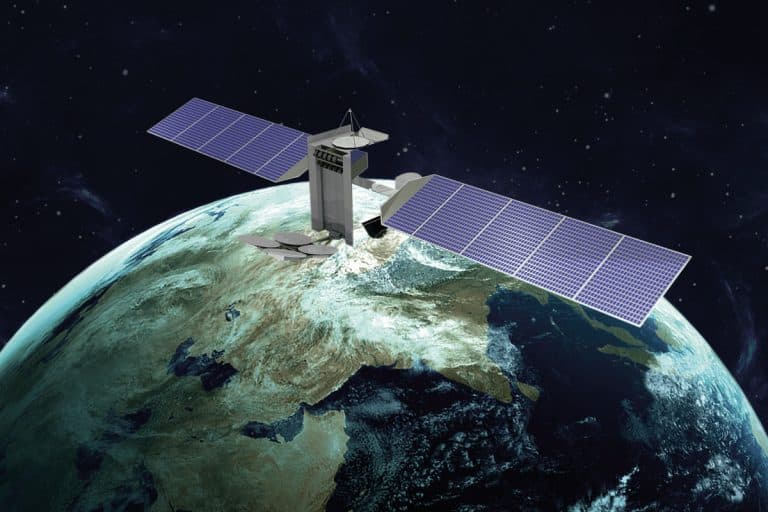
Yahsat Group is planning to allocate over $100 million for capital expenditures as part of the Thuraya 4-NGS satellite programme, which will form the next-generation telecommunications system for the company.
The Thuraya-4 NGS is part of Thuraya’s transformational programme to build a new and comprehensive ecosystem by upgrading all three segments – space, ground and products and solutions.
Yahsat’s ambitious satellite upgrade: Thuraya 4-NGS
Once operational in the first half of 2025, it will have much-improved capabilities, support multiple technologies, will be able to reconfigurable payload while in orbit (beams, channel size and bandwidth), provides a wide range of data rates above 1Mbps and will have enhanced security and resilience. It will also have a wider satellite footprint across Europe, Africa, Central Asia and the Middle East.
The total cost of Thuraya 4-NGS will be up to $550 million, including manufacturing, launch, insurance, and new ground infrastructure.
Ali Al Hashemi, Chief Executive Officer of Yahsat told Emirates News Agency (WAM) that the company has so far invested over $2 billion since its inception in satellite equipment, including its own Al Thuraya satellites, and over $1 billion in ground infrastructure worldwide.
Al Hashemi also said the company will make significant additional investments in the coming years to enhance its satellite fleet, including the potential launch of two new satellites, ‘Yah 4’ and ‘Yah 5’, for fixed satellite communication services.

Yahsat offers multi-mission satellite services in more than 150 countries across Europe, the Middle East, Africa, South America, Asia and Australasia. Its fleet of five satellites reaches more than 80 percent of the world’s population, enabling critical communications, including broadband, video broadcasting, backhauling and mobile voice and data solutions.
Al Hashemi said the company seeks potential opportunities to expand its operations and enter new markets, such as direct device communication solutions that provide direct connectivity from satellites to billions of devices, adding that the idea has gained significant interest from phone manufacturers and telecommunications operators.
The company is also looking at business opportunities in Earth observation and remote sensing sectors by launching at least five satellites in collaboration with the Bayanat. These will form a satellite constellation that uses Synthetic Aperture Radar (SAR) technology and monitors Earth through visual imaging.
Follow us on

