



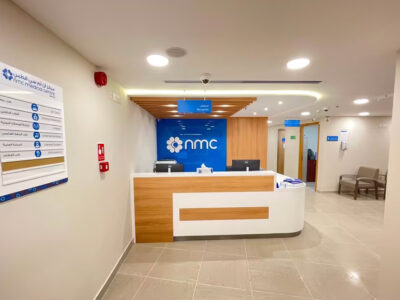


Saudi Arabia’s healthcare infrastructure is emerging as a significant opportunity for private investors and developers as the Kingdom prepares for rapid population growth and demographic change, according to new research from Knight Frank.
Driven by the government’s Vision 2030 programme, Saudi Arabia is undergoing a far-reaching economic transformation, with $1.3tn of real estate and infrastructure projects announced and $196bn in contracts awarded since 2016.
Over the next five to ten years alone, Knight Frank estimates that more than one million new homes and over 7.9 million sq m of office space could be completed.
Despite this scale of development, healthcare output accounted for just 4.8 per cent of Saudi Arabia’s GDP in 2023, compared with a global average ranging from 5 per cent to 12.5 per cent.
While this has historically reflected the Kingdom’s relatively young population, Knight Frank said demographic ageing over the next two decades will expose a significant infrastructure shortfall.
In Riyadh, the consultancy has identified a capacity gap of almost 15,300 hospital beds by 2040, based on global benchmarks.
Saudi healthcare investment
Dr Gireesh Kumar, Associate Partner – Healthcare Consultancy, MENA, said: “Saudi Arabia’s rising life expectancy—reaching 78.8 years in 2024—and a projected 2.4-fold increase in the elderly population by 2040 are placing healthcare at the centre of the Kingdom’s long-term development agenda.
“Although significant strides have been made in expanding healthcare capacity nationwide, the system still faces a structural gap in hospital bed availability. Current bed density stands at 2.0 beds per 1,000 people (excluding beds from other government sectors), below the global average of 2.9 beds per 1,000.
“Regional disparities also persist: Riyadh province and Jeddah city each have 1.8 beds per 1,000 people, while the Eastern Province performs slightly better at 2.2 beds per 1,000.”
Knight Frank’s analysis shows that 15–20 per cent of acute care beds are currently occupied by long-term care (LTC) patients, underscoring unmet demand in this segment. The Kingdom’s Ministry of Investment has identified LTC as a national investment priority, while the Health Holding Company has announced plans to allocate dedicated LTC beds by converting lower-capacity hospitals into specialised facilities.
Kumar said: “The investment potential for the long-term care (LTC) sector is significant: demand is expected to reach 12,000 LTC beds by 2030 and 24,400 by 2040. And with current occupancy already exceeding 90%, there is both an urgent need to expand LTC capacity and a growing opportunity for leading local healthcare providers and international healthcare operators to enter Saudi Arabia.”
Historically, many Saudis have travelled abroad for medical treatment, driven by perceptions of higher standards of care overseas. Knight Frank’s research shows that 31 per cent of Saudi nationals and 24 per cent of Saudi-based expats have travelled abroad for treatment, rising to 49 per cent among Saudi nationals earning SR50,000–70,000 ($13,300-$18,700) per month.
Faisal Durrani, Partner – Head of Research, MENA, said: “Given the seemingly well-entrenched perception that the quality of medical facilities, medical practitioners, as well as the standard of treatment is better abroad, there is a clear opportunity to recapture some of this demand by bringing more internationally recognised branded healthcare operators to the Kingdom.
“With our research showing that almost half of Saudi nationals on incomes of over SR50,000 ($13,300) a month would readily travel internationally for elective or essential medical procedures, there is a strong potential for premium, specialist-driven healthcare developments in Saudi Arabia, especially in Riyadh and Jeddah, where affluent nationals and expats show high engagement with international medical services.
“Expanding access to top-tier specialty care, wellness facilities, and advanced diagnostics domestically could help retain high-spending patients and curb outbound medical travel, particularly among insured and high-income groups.
“This could be achieved through partnering with internally renowned medical brands and facilities”.

Government reforms
Knight Frank added that government reforms are increasingly focused on attracting trusted global healthcare brands to operate locally and encouraging patients to remain in the Kingdom for treatment.
Within Saudi Arabia, private hospitals are the preferred option for elective procedures, chosen by 47 per cent of Saudi nationals and Saudi-based expats. Among Saudi nationals earning more than SR70,000 ($18,700) per month, preference for private hospitals exceeds 60 per cent, reflecting widespread family insurance coverage.
Overall, 83 per cent of Saudi nationals and expats are covered by health insurance, split between 50 per cent on family plans and 33 per cent on single plans. Among Saudi nationals, insurance coverage rises with income, with those earning SR70,000 ($18,700) or more per month showing the highest penetration.
Location also plays a key role in healthcare choice. Most respondents prefer facilities within 5–10km (38 per cent) or within 5km (25 per cent), with 59 per cent of Saudi nationals earning SR70,000–80,000 ($18,700-21,300) per month expecting suitable facilities within 5km of their homes.
Kumar said: “The combination of high insurance penetration, a clear preference for private healthcare among affluent households and travel distance expectations creates distinct investment opportunities.
“For high-income and expatriate-heavy neighbourhoods, there is scope to develop premium hospitals, day surgery centres and specialist clinics. For middle-income Saudi communities, there remains a gap in adequate supply of mid market healthcare facilities.
“Locating new healthcare developments within 5-10km of major residential and commercial clusters will address both accessibility and utilisation considerations.”
Knight Frank also highlighted the growing importance of senior living, a sector still in its early stages in Saudi Arabia and the wider region. As life expectancy rises, demand is expected to grow for lifestyle-led communities that integrate healthcare access, wellness and social engagement.
Durrani said: “Traditional care homes have yet to be widely embraced culturally, but our research shows increasing interest – particularly among affluent families – in alternative care models. These include integrated care systems rather than conventional “daycare”, where elderly residents can be cared for during the day, receive medical supervision and medication, and remain socially connected.
“Families expect such facilities to be embedded within residential communities, allowing families to visit easily and stay closely involved in their relatives’ daily care”.
Quality of life
This trend aligns with the Kingdom’s Quality of Life Programme 2023, which prioritises wellness and elderly care infrastructure within new urban developments. Home-care services, already used by 43 per cent of households, are also gaining traction as part of a broader shift toward decentralised, patient-centred care.
Support for integrated senior living facilities is strongest among Saudi nationals (85 per cent) and households earning more than SR80,000 ($21,300) per month (100 per cent). Notably, 75 per cent of Saudi-based expats also support this approach.
Amar Hussain, Associate Partner – Research, MENA, said: “While still a relatively nascent segment of the healthcare landscape in the Kingdom, we expect demand for senior living and associated medical facilities to grow rapidly as the population begins to age.
“Indeed, we forecast that the number of Saudi nationals aged 65 and over will more than double by 2040 to 2.15 million, from 984,000 in 2024.
“There is already strong recognition of the important role senior living will play in the Kingdom’s future, with 84 per cent of Saudis agreeing that dedicated senior living facilities need to be integrated in the country’s real estate development plans.
“There is clear potential for strong uptake in premium, well-located senior living developments catering to higher-income households. Our analysis suggests that home care is a valued healthcare delivery model in Saudi Arabia, with affluent and higher-need households demonstrating the greatest willingness to adopt it.
“As demand skews towards specialised rehabilitative and diagnostic services, there is an opportunity for healthcare providers and investors to expand premium, on-demand home-care solutions that cater to both convenience and complex medical requirements.”
Follow us on

