




At the heart of Vision 2030 is a pledge to enrich the cultural sector. True to this promise, some of the most impressive and ambitious new additions to the Saudi skyscape are projects devoted to the pursuit of the arts. The second phase of King Fahad Cultural Center, the stage where Zarqa Al Yamama – Saudi Arabia’s first and largest Arabic opera presented by the Theater and Performing Arts Commission – made its debut, is set to open in April 2025. The Royal Arts Complex – a collaboration between the Ministry of Culture and The King Salman Park Foundation – will house the Museum of World Cultures, the National Theatre, and the Royal Institute of Traditional Arts.
Furthermore, the Diriyah Company-powered Royal Diriyah Opera House is set to house the Kingdom’s first opera destination in Saudi Arabia, and “embodies our aspirations for Riyadh to be a city at the forefront of global cultural and architectural innovation,” declares His Excellency Ibrahim Al-Sultan, Minister of State, Member of the Council of Ministers, and CEO of the Royal Commission for Riyadh City.
Surveying the burgeoning landscape, Dr. Sumayah Al-Solaiman, CEO of the Architecture and Design Commission of Saudi Arabia, who is leading the development of the industry, explains, “For me, it’s not necessarily about one single building, but more about the diversity of offerings coming up. I also think the importance of music in programming spaces has become a major component of consideration. It doesn’t necessarily always have to be about the building and the architecture.”
This is music to the ears of Shain Shapiro, PhD, who’s behind the Music Cities Convention and Awards, the biggest global event exploring the use and importance of music in the development of cities all around the world, taking place at Mayadeen Village, Diriyah, from 8-10 December 2024 as part of the inaugural edition of Riyadh Music Week – an initiative presented by the Saudi Music Commission – and author of This Must Be The Place: How Music Can Make Your City Better.
The economic value of music
As one of the world’s leading music and cultural policy thinkers, Shapiro has spent the last 10 years building a practice around the idea of incorporating music into urban planning. “Over time, you start to realise that a lot of the challenges that music faces are place-based challenges,” he reflects.
“We need investment, space, and place, and regulation that is supportive of music rather than makes progress more difficult. We need people to see it as a business – a lot of people don’t, especially in the Middle East, even though that is changing – and in order to do that, then you need to identify the economic value and help explain the economics of music and how they relate to place.”
With the story of music as a business in Saudi Arabia still being written, the economics of music still remain largely unknown. “It’s about creating a data and evidence base to help explain how music works at its most basic level: why it matters, how it is then integrated into bigger questions like how to create jobs, how to support tourism, or how to make a place more attractive,” he explains. “And the work comes from that.”
In his book, This Must Be The Place: How Music Can Make Your City Better – the Arabic version of which is out now, published by Tashkeel – Shapiro examines how music can be integrated into city planning. When it comes to applying his ideas to the unique circumstances of Saudi Arabia, Shapiro’s mood brightens with excitement. “It’s amazing how much the country has changed in such a short period of time. Some places don’t change in several hundred years. And in this context, Saudi has changed dramatically in 10 years, for the better.”
Shapiro believes the most important question to consider is: how can music be monetised equitably so that it can contribute to the country’s growth? “I believe that music is a tool for economic diversification,” he declares. Beyond its contribution to the GDP, Shapiro also sees the value in music as cultural capital for the Kingdom. “Music is an incredible tool in Saudi to diversify, to educate, to inspire, and to continue to build bridges with other countries and cultures around the world – especially when Saudi music culture is so deep and so ingrained, but most people have no idea that it exists,” he points out. “More people need to know about the history and the etymology of Saudi music, and how that’s manifesting itself now in hip hop, post-rock and metal, and other genres, too.”
Music as a design tool
Al-Solaiman quotes the German polymath and poet Johann Wolfgang von Goethe who declared, “Music is liquid architecture; architecture is frozen music.” She elaborates, “Cities have a heartbeat, and façades have a rhythm when there’s a repetitive component.” Aesthetics aside, she adds, “We want to bring back the multisensorial experience of what architecture and design can do, because it is all about making sure we understand and design for people, even in ways that, maybe for them, is not so apparent.”
She continues, “I would like to start to see these spaces being designed better for sound, and better for bringing people together. We should ask ourselves how sound travels on the different surfaces. Can we think about how you can make places seem more intimate just by the way that music reverberates off the walls? In terms of thinking, it could be extremely interesting and elevate people’s quality of life as well as their appreciation of music in the process.”

Shapiro agrees with Al-Solaiman. “Soundscape is as important as landscape when it comes to building design,” he asserts. “And the livability of a place is as impacted by access to an inclusion of music, as it is access to an inclusion of green space. It’s the same thing.”
A destination for music tourism
Music festivals such as Coachella in California, and Glastonbury in Somerset, England, are cornerstone events that make a significant contribution to their respective music and tourism economies. By driving revenue, creating jobs, boosting global branding, and offering cultural and social value, they serve as vital pillars of the industry while shaping global cultural trends. With AlUla’s AZIMUTH festival celebrating its fourth edition this year and MDLBEAST’s Soundstorm’s fifth iteration closing Riyadh Music Week 2024 with Eminem, Muse, and Linkin Park and among the headliners, could the Kingdom soon be cementing its spot on the festival-goers’ calendar?
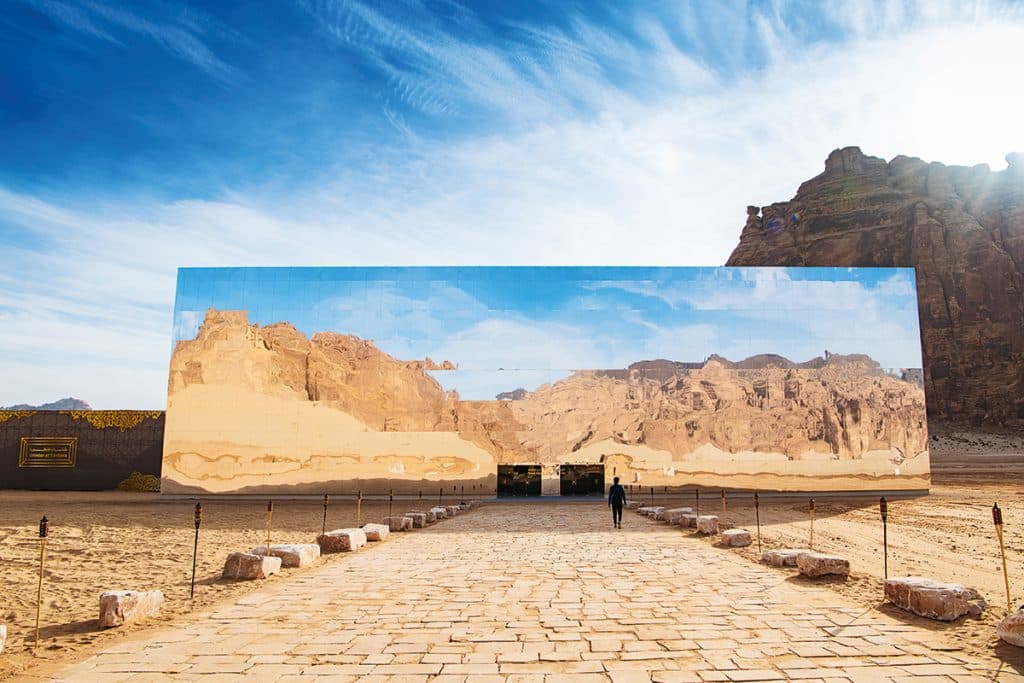
For Rami AlMoallim, Vice President of Destination Management and Marketing at the Royal Commission for AlUla, the location is as compelling a draw as international acts such as Andrea Bocelli, Alicia Keys, and Usher. And in stark contrast to the age-old landscapes stands Maraya, AlUla’s futuristic concert hall, like a mirage in the desert. AlMoallim acknowledges, “The live music industry in AlUla has seen momentous growth and I believe that this upward trajectory and growing international recognition has no limits. AlUla will continue to grow a flourishing and diverse music scene that attracts global and regional talent and encourages local innovation.”
The blueprint for Saudi Arabia
“The work that Paul Pacifico is doing as CEO of the Music Commission of Saudi Arabia, is commendable and inspiring,” Shapiro notes. Comparing his own studies of emerging music markets, including the 400 cities that have established comprehensive music policies, to the developments in the Kingdom, he observes, “I feel that there’s an island mentality rather than an anchor mentality – so a lot of great initiatives and then nothing in between. One place is not an ecosystem,” he stresses. “So, Saudi needs a holistic city policy that recognises music as an economy. And with Pacifico leading the sector, I think that’s going to happen.”
*This article was first published in The Business of Music
Follow us on

