



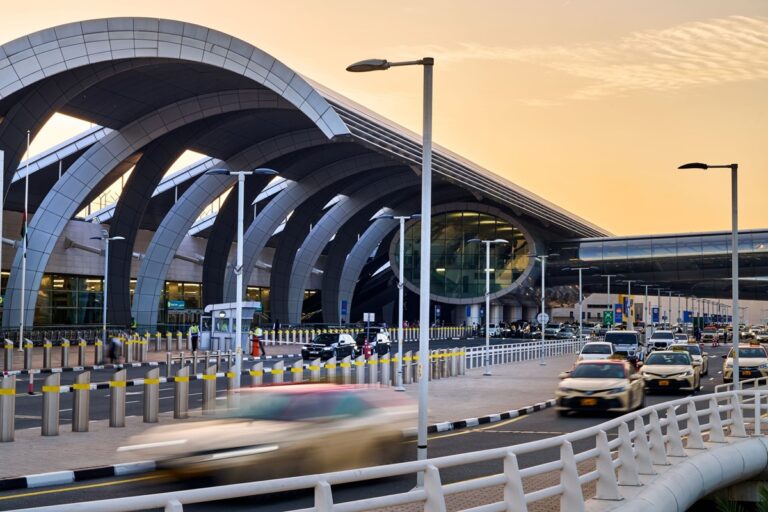
Dubai International (DXB) has recorded the highest quarterly traffic in its 65-year history, welcoming 24.2m guests between July and September 2025 – a 1.9 per cent increase year-on-year.
The record-breaking third quarter lifted total passenger volumes for the first nine months to 70.1m guests, up 2.1 per cent over the same period last year, and pushed the airport’s twelve-month rolling traffic to a new high of 93.8m guests at the end of September.
Operational activity remained strong throughout the period.
Dubai International Airport passengers
DXB recorded 115,000 aircraft movements in the third quarter, while total flights between January and September reached 336,000 across all categories, representing 2.7 per cent year-on-year growth.
The average number of passengers per aircraft at the end of September stood at 213.
Dubai Airports said that while DXB continues to deliver exceptional operational performance, its focus is firmly on maintaining service excellence while preparing for the airport’s next phase of development.
A series of future priority projects are underway across all terminals, including CB Central – a dedicated space in Terminal 3 showcasing leading Dubai brands and experiences; CB East – a family-focused zone offering mainstream dining and entertainment; and CB West – the new centre of DXB with premium shopping and casual dining options.
Terminal 1 enhancements include CD Central, located at the heart of Concourse D, offering panoramic airfield views, refreshed dwell areas and improved access to major retail stores.
Dubai Airports
As Dubai Airports manages growth at DXB, preparations are also advancing for Dubai World Central – Al Maktoum International (DWC), which will become the city’s main international gateway in the early 2030s.
The new airport is being purpose-built as a future-ready global hub designed to elevate efficiency, connectivity and sustainability.
Paul Griffiths, CEO of Dubai Airports, said: “These record-breaking results reflect the continued strength of Dubai’s aviation and tourism sectors, and to the collective efforts of our oneDXB airport community.
“Yet, it also reinforces the importance of what comes next. The vision for DWC goes beyond capacity expansion – it represents the reimaging and evolution of the entire travel experience.
“Our goal is not just to grow, but to grow intelligently by combining technology, sustainability, and a superior guest experience, which will shape the future of global travel.”
International markets
India retained its position as DXB’s top country market in the first nine months of the year with 8.8m guests, followed by Saudi Arabia (5.5m), the United Kingdom (4.6m), Pakistan (3.2m) and the United States (2.4m).
Among city destinations, London led with 2.8m guests, followed by Riyadh (2.3m), Mumbai (1.8m), Jeddah (1.7m) and New Delhi (1.6m).
DXB also remained a major gateway for international tourism, with Malaysia (687,000 guests), Vietnam (493,000), the Czech Republic (341,000), Uzbekistan (312,000) and Denmark (239,000) ranking among the most popular outbound leisure destinations.
Operational efficiency metrics also reached new highs. The airport handled 63.8m bags in the first nine months, a 6.2 per cent year-on-year increase and the highest ever for the period.
Of these, 90 per cent reached guests within 45 minutes of aircraft arrival. Mishandled baggage accuracy reached 99.9 per cent, equivalent to two mishandled bags per 1,000 guests.
During the third quarter, 99.6 per cent of departing guests cleared passport control in under 10 minutes, while 99.8 per cent of arriving passengers waited less than 15 minutes.
Security screening times were under five minutes for 99.7 per cent of travellers, underscoring DXB’s commitment to efficiency even at peak volumes.
DXB’s performance continues to reinforce Dubai’s position as a global economic hub, where aviation plays a central role in driving tourism, trade and investment.
Follow us on

