


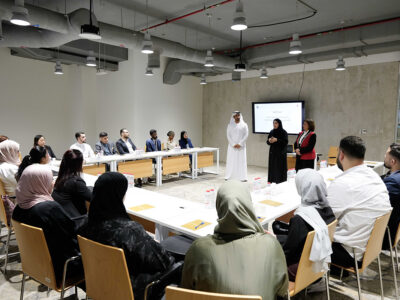


PwC Middle East is expecting an increased intake of students from Middle East universities as it announced plans to recruit 500 graduates from the region annually.
The drive was announced on Tuesday as part of ‘The New Equation’, a global strategy which responds to fundamental changes in the world, including technological disruption, resource scarcity, demographic and social change, and the continuing effects of the Covid-19 pandemic.
Stephen Anderson, the PwC Middle East strategy and markets leader, told Arabian Business the annual cohort will compliment what he described as a “substantial graduate programme” already operated by the consultancy giant.
These currently come from universities in the US and the UK, with an increasing drive towards attaining talent from the Middle East region.
Anderson said: “We’ve seen, particularly in Saudi, Qatar and here in the UAE, an increase in the number of graduates we’re taking, both in terms of nationals and people who have gone through that system. We’re big supporters of those institutions and we’d expect the numbers coming from those to increase over time.”
He added that nationalisation targets set in various countries, particularly across the GCC, would be “fundamental” to future graduate recruitment. For example, 90 percent of graduates into Saudi Arabia this year will be Saudi nationals.
Through the recruitment, Anderson explained that the split between males and females would be as close to 50/50 as possible, while 80 percent would be Arabic speaking.
This complements a further commitment towards “doubling down on our existing commitment to promote inclusion and diversity”, according to a statement from the company. Currently PwC Middle East has a 35 percent/65 percent split between male and female colleagues.
 Stephen Anderson, Strategy and Markets Leader at PwC Middle East
Anderson said: “If you’re going to solve a problem then having diversity in your team is vital and that’s all forms of diversity. Yes, there’s a gender aspect to it, but there’s also a background to it and a diversity of perspective.
“It’s certainly not a ‘nice to have’ for us, it’s pretty fundamental in delivering on our purpose and clearly more broadly we want to lead the way on this in the region, to be role models for our clients and more broadly.”
As well as through the graduate programme, Anderson said the diversity challenge will be tackled by balancing experienced hires and through mentoring and coaching for female staff.
Follow us on

