





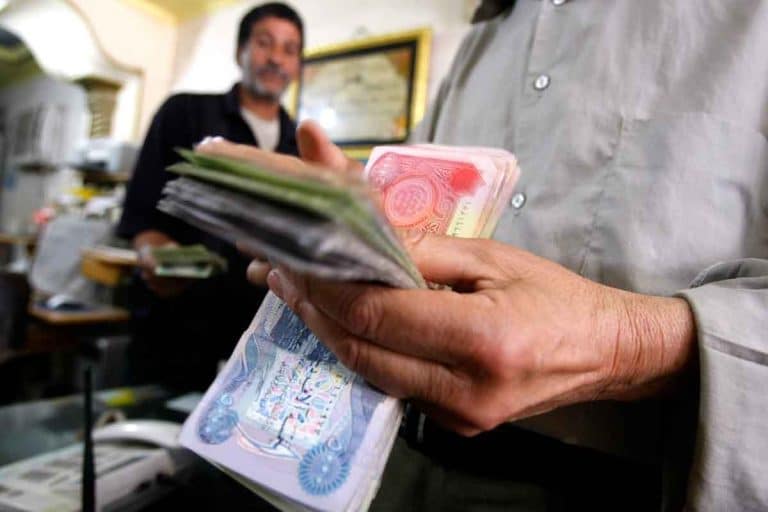
Iraq is undergoing a massive transformation as the country seeks to tackle its reliance on cash and embrace digitalisation.
Solving the problem of the unbanked has been identified as crucial to economic progress. In Iraq, a historic reliance on cash combined with low consumer confidence has resulted in over 80 percent of the country’s population lacking a bank account. Not only is this a challenge to the country’s banking sector, but it also constrains the country’s potential economic growth.
Leila Serhan, Vice President and Group Country Manager – North Africa, Levant and Pakistan (NALP) at Visa, said that “a lack of public trust in electronic payments” along with a lacking regulatory framework were continuing to “hinder the efforts to digitise the economy and displace cash.”
“The Central Bank of Iraq is actively working to expand digital access and promote digitisation within the banking sector, aligning with the country’s Vision 2030 for a diverse digital economy and financial inclusion,” Serhan said in an exclusive interview with Arabian Business.
In 2021, the World Bank reported that 81 percent of adults in Iraq did not have a bank account, as cash has long been the preferred mode of exchange in a nation with a significant unbanked population, security concerns, and limited financial literacy.
Yet, change has been taking place following the global Covid-19 pandemic, Serhan said, adding the goal is to steer Iraq away from its cash-heavy reliance towards a more digital future.
“It is worth noting that cash displacement in the North Africa, Levant, and Pakistan (NALP) region has accelerated in the last two years,” Serhan said, adding that digital payment adoption will “increase even more rapidly in the coming years.”

But why does Iraq lean towards cash payments?
For several reasons, with its foremost reason being the lack of access to traditional banking services.
According to Serhan, a large portion of the population lacks access to traditional banking services. Additionally, the relatively high cost of internet and mobile services restricts the widespread adoption of digital financial solutions as well as security concerns further push those in Iraq to stick to cash payments, particularly in e-commerce.
Serhan emphasizes that the Central Bank of Iraq is actively bridging the knowledge gap and instilling confidence in digital payment methods.
The journey towards digital payments faces challenges, but it also presents an opportunity to promote financial literacy, expand financial inclusion, and encourage economic growth.
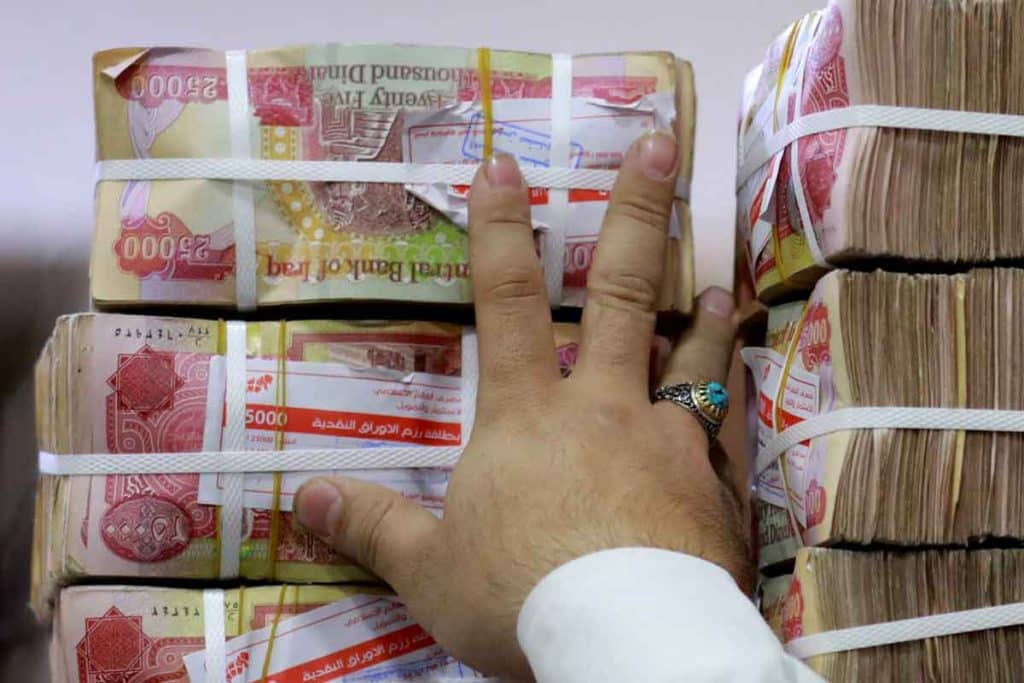
Recently, Iraq announced a cash withdrawal and US dollar transaction ban effective January 1, 2024.
The goal is to curtail the misuse of hard currency reserves, combat financial crimes, and prevent the evasion of US sanctions on Iran.
This decision reflects the country’s commitment to safeguarding its financial system’s integrity and stability. It is part of broader efforts to enhance transparency and accountability in its financial sector.
The move signifies a proactive approach to align with international financial standards and regulations while addressing critical issues associated with foreign currency reserves.
Addressing security concerns
The country faces its own set of challenges, including its reputation as one of the most graft-prone countries in the world in 2022, according to a report by Transparency.org.
“While it’s true that Iraq has faced challenges related to corruption and graft, these issues are not unique to the country and can be found in various parts of the world. Visa recognises the importance of addressing security concerns in all the markets we operate in, including Iraq,” Serhan said.
Observing changes in consumer behaviour
In recent years, Iraq has witnessed notable changes in consumer behavior regarding payment preferences, Serhan noted.
“With the Central Bank of Iraq’s focus on increasing digital penetration/access among consumers and encouraging digitisation in the banking industry and promoting financial inclusion, the industry is all geared towards achieving Iraq’s Vision 2030 for a diversified digital economy and increased global competitiveness,” she said.
However, Iraq has achieved significant advancements in its financial ecosystem, according to Serhan.
Notably, it stands out as one of the pioneering markets in the region to roll out virtual cards via a mobile app, preceding the issuance of physical cards to users.
“Multi-currency cards connected to a wallet and digital onboarding have also been introduced in the market. Currently, quite a few payment service providers in Iraq are fintech companies. These entities are introducing groundbreaking services such as multi-currency applications and online trading with US stocks, transforming the consumer experience and expanding financial inclusion in Iraq,” she said.

Government mandates and their impact
The mandates from the Prime Minister and the Central Bank of Iraq also have a major impact on digital payment adoption.
“The Iraqi government has been driving nationwide transformation in line with the Vision 2030 goal of achieving diversified economic growth,” she said.
Iraq Vision 2030, according to officials, aims to diversify the economy, enhance infrastructure, invest in human capital, promote environmental sustainability, and strengthen governance for a prosperous nation by 2030.
“Our collaboration with the Central Bank of Iraq in formulating regulations and policies, including eKYC and digital issuance, has played a crucial role in driving market growth. Furthermore, our recent educational campaign in partnership with the Central Bank aims to empower Iraqi merchants and consumers with the knowledge and tools needed to embrace digital payments, contributing to the growth of a secure and efficient digital payments ecosystem in Iraq,” Serhan explained.
Challenges in transitioning to digital payments
Yet, challenges persist for both consumers and businesses in transitioning to digital payments. Trust in electronic payments remains low, interoperability of digital wallets is limited, and online fraud poses a significant threat.
Education and financial literacy play a vital role in overcoming these challenges.

“Iraq has a very high penetration of smartphones (65.53 percent) and internet access (+7.3 million year-on-year); however, the existing regulatory framework has its limitations and needs revision to reap the benefits and drive further digitisation of payments. A lack of public trust in electronic payments is another challenge to the adoption of digital transactions in the country, coupled with the absence of interoperability of digital wallets, which limits cardholders and merchants’ payment options. These factors hinder the efforts to digitize the economy and displace cash,” Serhan said.
Visa has launched educational campaigns, supported the launch of digital-only payment cards, and enabled multi-currency and virtual cards.
Their recent initiative, endorsed by Prime Minister Mohammed Shia’ Al Sudani, aims to create awareness of the safety, convenience, and security of digital transactions.
“Over the years, we have been extremely active in the Iraqi market. As mentioned, we started with an educational campaign, which we launched in partnership with the Central Bank across Iraq and Kurdistan, where we targeted individuals with Accounts Receivable Conversions (ARCs) and merchants with POS, with the aim to activate the ecosystem. Additionally, we ran a usage activation campaign to enable people to see how rewarding it was to use cards.
“We have had campaigns with local partners such as Toters and international partners like Meta, where we helped the Iraqi people understand the benefits of using a card and benefit from it. A collaboration with eCommerce platform Miswag was three-tier, with the aim of targeting shoppers during Black Friday and Cyber Monday and then running a campaign over a period of four months where they get discounts and cashback every Tuesday,” she said.
Follow us on

