

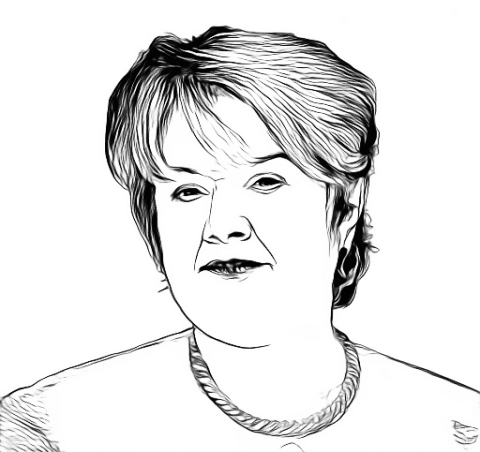





The response to my news in 2022 was interesting. When I told people (all sorts of people from many different countries) that I was moving to the UAE, a number of them expressed surprise that my university was sending a woman to lead a university in the Gulf.
No matter that there are many women leading universities here (Mariet Westermann at New York University Abu Dhabi and Sabrina Joseph at the American University in Dubai are two shining examples, and there are many more), it was suggested by many that my employer was being brave by sending a woman to the Middle East.
This is, of course, a very ignorant reaction. The UAE is one of the most welcoming places for a woman to work. If you want to know the real reason why my employer was brave, it is this – I was 60 years of age when I was posted to my current role.
Now, a lady should never admit her age, and I have been told by my colleagues that it is a very bad form to draw attention to it. But I readily admit that I am at a time in my life where I need to think about my ‘financial finish line’, and if you are reading this and are anywhere near my age, you should be thinking about yours as well.
What is a ‘financial finish line’? It is when you have achieved all your financial goals. Paid off your mortgage, paid for your children’s education, and saved enough to see you through the final years of your life. Women need to think about this even more than men. Why?
- Women live longer. While the longevity gap is closing in the developed world, women still live longer than men, thanks to our extra X chromosome. According to a 2021 WorldData.info report, globally, the life expectancy for women is 73.9 years compared to 68.9 years for men. In the UAE, it is 77.2 years for men compared to 80.9 years for women.
- Women may be on their own. Astonishingly, I am still married to my husband after 34 years. But the odds are against us: when you get married, you hope to stay together and certainly hope that your partner will not die before you. But divorce does happen, and spouses can die before us. As I have often said, a man is not a financial plan.
- Women have usually earned less. Women are more likely than men to work part-time and to have broken work histories (having children, relocating with their spouse, caring for aged relatives).
So, have you reached your financial finish line? Investing in your future is critically important. When did you last stop to determine if your financial future was secure? It helps if you can estimate how much you need to live on and for how many years. Could you work part-time in the future? I expect and hope to be working as a part-time lecturer or even a school teacher for a good few years after I retire from full-time employment.
While multiple websites can help you to assess if you have enough money to retire, they all make assumptions about tax and savings rates that are very country-specific, and for these reasons, they rarely apply in the UAE. Most of the population is expatriates and does not plan to continue to live in the country after they retire from full-time employment.
However, that is becoming easier thanks to the Golden Visa scheme. Where are you going to live, and are you building enough assets in that country? Although I am a UK citizen, I am married to an Australian and plan to spend the last years of my life there rather than in the UK (not just because of the weather, and not even because there is no inheritance tax!).
A forward forecast of what I expect to need as an income when I retire (including still being able to afford to go to the hairdresser and the beauty therapist), along with an assumed level of inflation, showed me that is that I need to make my savings and investments work for me. This means I need investments in shares, property and government securities.
Over time, companies that are successful at what they do will grow more rapidly than cash sitting in the bank will. That is why people investing their money for the long term will invest much of it into stocks and shares of growing companies.

But even when I worked as a stockbroker myself, I rarely invested my own money (it is a frightening reality that the book I wrote about my time in the world of stocks and shares, Survival in the City, originally published in 2003, has barely dated – that alone should alarm you). If you want to make a success of investing in the stock market, you need to be really informed all the time and know when to buy and sell. Even the people whose job is to be informed and buy and sell stocks and shares often don’t get it right.
But just because you delegate the action does not mean you should delegate the information. Make sure you know what your money is being invested in. Indeed, if you are a woman preparing for a time when you work less or not at all, here is my key piece of financial advice. Invest an hour a week in your own finances.
Get to know everything about where your money is, what interest rates you are getting on your savings or returns on your investments (or paying on your credit cards and mortgage), and draw up a financial finish line. One number I am absolutely sure of is – we all have 168 hours a week (that includes sleeping). Isn’t’ it worth investing one of those hours a week on your financial finish line?
Follow us on

