


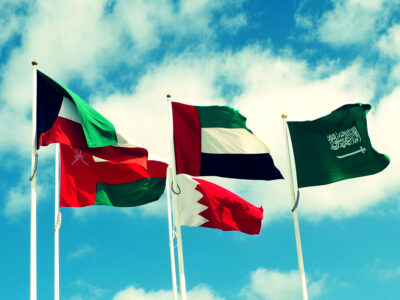


Other countries across the GCC could follow Oman’s lead in introducing some form of income tax although they may wait to see how the measures impact the sultanate, according to a leading economic expert.
Oman announced on Monday plans to start taxing the income of wealthy individuals from 2022.
The move by the cash-strapped sultanate is part of measures designed to tackle a budget deficit that’s ballooned due to low oil prices and the coronavirus pandemic.
Scott Livermore, ICAEW economic advisor and chief economist at Oxford Economics, told Arabian Business: “It would be highly surprising if other GCC economies weren’t discussing ways of diversifying their tax base, including looking at personal and corporate income tax. Other GCC countries have a bit more breathing space and are likely to see the impact of Oman implementing the tax.”
.jpg?CZnTG3eb) Scott Livermore, ICAEW economic advisor and chief economist at Oxford Economics
Scott Livermore, ICAEW economic advisor and chief economist at Oxford Economics
All six Gulf Cooperation Council (GCC) member states signed the Common VAT Agreement back in June 2016 whereby they would introduce a VAT system at a rate of five percent.
Saudi Arabia made the first move in February 2017, although the level of VAT has since recently gone up to 15 percent in light of the aforementioned twin shocks of oil prices and the global pandemic. This was followed by the UAE in July of that year and Bahrain in January 2019.
Last month Oman announced it would introduce VAT in April next year as concerns grow over the country’s finances.
The International Monetary Fund (IMF) sees Oman’s economy shrinking 10 percent this year, the steepest contraction among peers.
By reducing government spending while spurring investments, the plan to tax the income of the wealthy is projected to bring the budget deficit – estimated to reach nearly 19 percent of gross domestic product in 2020 by the IMF – to 1.7 percent by 2024, the Ministry of Finance.

The plan – whose implementation is still currently being studied – doesn’t specify income brackets, but Livermore admitted he would not be surprised to see further taxation measures introduced in the sultanate.
He said: “Oman clearly needs to drastically reduce its budget deficit but income tax would be a shock to many citizens. The challenge to diversify revenue without taxing population more means an income tax on the wealthy is likely be a stepping stone to other measures – whether this is a general income tax or more focus on VAT and other indirect taxes depends on how the implementation of these taxes are received.”
Often deemed the weakest economic link in the region, Oman’s debt surged to 60 percent of GDP last year. In October, the sultanate sold $1.25 billion in seven-year securities, and $750 million in notes maturing in 2032, and said it was in talks to win support from some states in the region, according to its bond prospectus.
Livermore believed that the wealthy tax proposal could ease the financial stresses on the sultanate.
He said: “If this convinces markets that Oman has a serious and credible plan to tackle its fiscal position, then it could ease borrowing costs and access to funds in the short run and as such act has a pressure valve for the economy before the new taxes are actually implemented.”
Follow us on

