




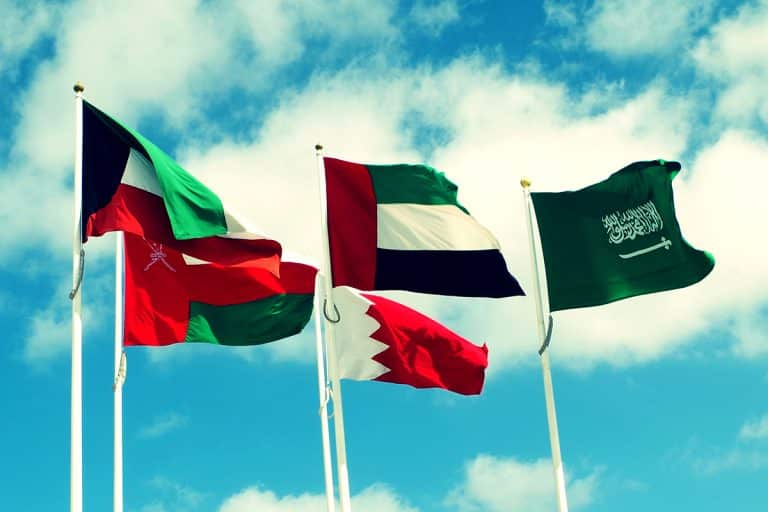
As President-elect Donald Trump signals an aggressive trade stance against China and threatens allies with tariffs, Gulf nations may be positioning themselves as potential beneficiaries of shifting global supply chains – though experts warn the gains may be limited.
“The UAE and Saudi Arabia could emerge as strategic beneficiaries by capitalising on their dual role as energy suppliers to China and security partners to the US,” Adrian Shatku, CEO of UNIFI Capital Group, told Arabian Business.
The assessment comes as Trump has announced plans for tariffs of up to 60 per cent on Chinese imports when he takes office in January, alongside duties of 25 per cent on Canadian and Mexican goods.
Shifting dynamics
But Nicolas Michelon, CEO of Asia Intelligence Advisory, suggests expectations of major gains should be tempered.
“When it comes to the Gulf and the impact on supply chains, whether that could benefit Gulf states like the UAE or KSA, I think it’s going to be marginal from now on,” Michelon said. “The main disruption of supply chain has already happened in the first Trump administration.”
Many countries are already adapting, particularly using the UAE as an alternative hub. “I’m not quite sure it’s a new momentum, I’m just thinking that it’s going to continue the existing momentum that places the UAE in the centre of new diversified supply chains,” Michelon added.
Former Trump trade advisor Barry Bennett points to deeper regional challenges, particularly regarding Iran.
“From my time at the G-8 with president Bush we have some really good allies in the Gulf,” Bennett told Arabian Business.
“But I remember back to 2016 when there was a terrorism conference, Mohammed bin Salman led a delegation, and I met with some senior members of his delegation in my office, and I asked them what was their number 1 objective and they told me point blank it was regime change in Iran.”
Strategic positioning
Geopolitical strategist Abishur Prakash suggests Gulf countries must navigate carefully between the US and China.
“As far as benefit, the UAE and KSA could continue their rise as the ‘safe zones’ that the world gravitates to as China shakes and Europe wobbles,” Prakash said.
“This would put the UAE and KSA alongside the likes of India and Vietnam in Asia. But, it is increasingly likely that neutrality will disappear as geopolitical challenges mount.”
Bennett emphasised that regional stability remains critical.
“Everything else is maybe some petty jealousy between nations but that’s like minor compared to the problem that Iran is causing and eventually… I mean you have to admit the Biden administration’s policies on Iran were abysmal, complete failure,” the former trade advisor said.
The Trump administration’s tough stance on Iran could influence regional dynamics.
“If you sat privately with the leaders of all the major Gulf countries they would tell you the exact same thing. That regime change in Iran is the only thing that really solves the problem,” Bennett said.
However, Shatku pointed to potential opportunities in infrastructure development.
“Trump’s administration could prioritise addressing vulnerabilities in chokepoints such as the Suez Canal by exploring alternative routes and investing in secure subsea cable systems. Partnerships with nations like Saudi Arabia and Israel could play a key role in these initiatives,” he said.
Economic implications
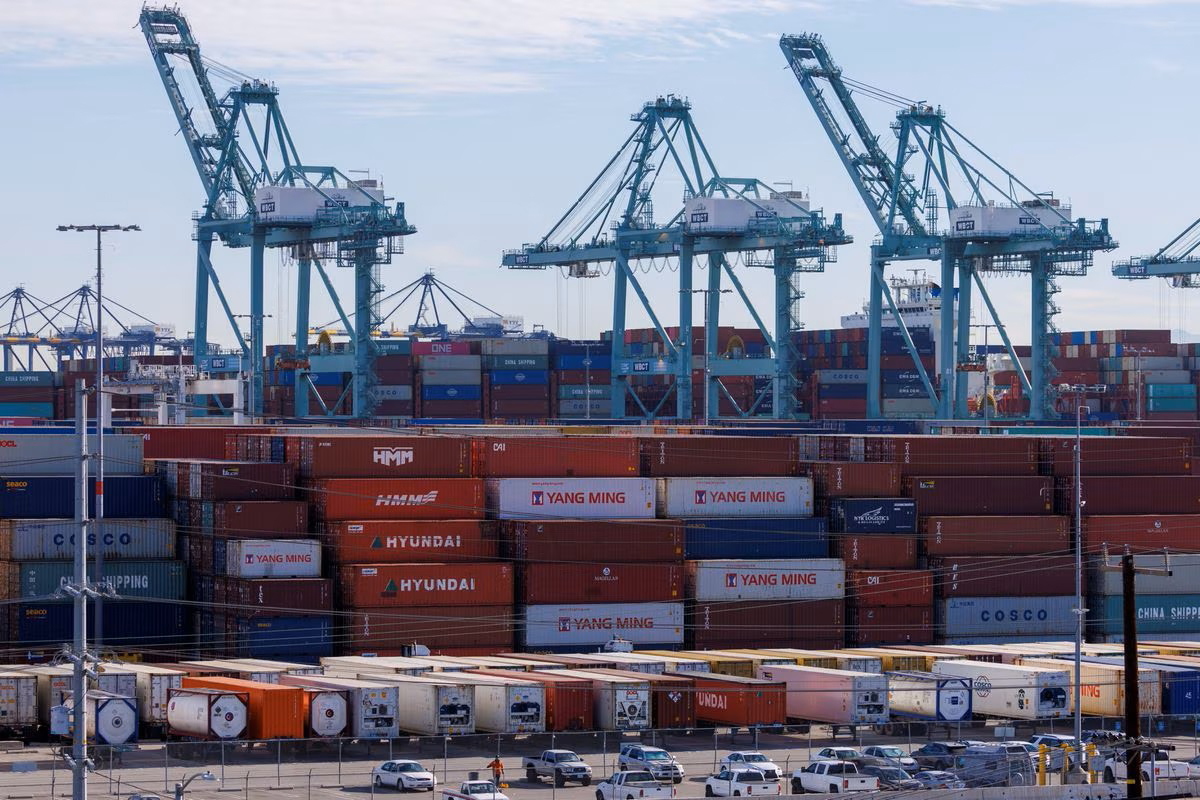
The Gulf states’ position comes amid broader changes in global manufacturing economics. Former Trump advisor Bennett noted that automation and transportation costs are reshaping traditional trade advantages.
“The cost of transportation of goods to market is exceeding any competitive advantage you might have as a low-cost labour provider,” Bennett said, suggesting Gulf countries might need to focus on high-tech manufacturing rather than purely serving as trade hubs.
As Trump prepares to return to office, Gulf states face both opportunities and challenges in positioning themselves amid US-China tensions.
The surprise effect of Trump’s first-term trade disruptions has passed, Michelon noted.
“Now there’s no surprise, we know exactly what he’s going to do, he’s going to go back to doing what he did before, he’s going to announce it, that he’s going to get back to it and crank it up a notch,” he said.
Whether Gulf states can maintain their delicate balance between competing powers while capitalising on trade opportunities remains to be seen. But experts agree their strategic importance is likely to grow as global trade patterns shift.
Follow us on

