



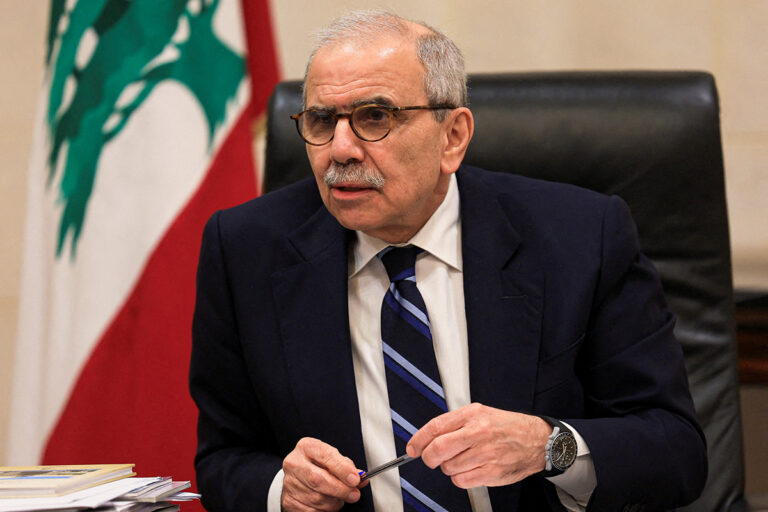
Lebanese Prime Minister Nawaf Salam has urged the cabinet to resolve the recovery of frozen funds in the country’s banking system since a financial collapse in 2019 by approving a draft law that would allow the depositors to do so.
Reuters said that draft of the new law, published last week, foresees repayments to small depositors with deposits valued at less than US$100,000 in monthly or quarterly instalments over four years.
Deposits larger than US$100,000 will be repaid via tradable, asset-backed securities to be issued by the central bank or Banque du Liban (BdL), with no less than 2 per cent of the value paid annually.
Lebanon seeks solution for bank deposits
The maturity period will be set at 10 years for deposits valued at up to US$1 million, at 15 years for deposits valued from US$1 million to US$5 million, and at 20 years for deposits valued at more than US$5 million.
The securities will be backed by the income, revenues and returns of BdL-owned assets and any proceeds from the sale of assets, if any occur. The draft mentions precious metals, which have soared in value this year, as one possible source of income.
Salam said the law is realistic and its goal is to do “justice to depositors”, and also spark a recovery in the banking sector.
Finance Minister Yassine Jaber told Reuters implementation of the law would boost the economy, pumping deposits of US$3-US$4 billion annually into the system.
Jaber noted that the value of BdL’s gold assets had risen with the price of gold since 2020, which would help provide confidence in the asset-backed securities.
The law requires an international auditing firm to evaluate BdL’s assets within one month to determine the size of the funding shortfall. Banks must also conduct an asset quality review and recapitalize.
The Association of Banks in Lebanon has objected to the draft, saying that the proposals do not reflect banks’ ability to meet “their obligations towards depositors” and that the state was not “fulfilling its outstanding debts to BdL”.
Follow us on

