



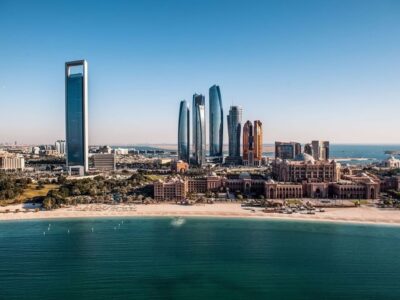



The United Arab Emirates is projected to achieve 4.1 per cent GDP growth in 2025, supported by robust non-oil sector performance and recovery in oil production, according to World Bank forecasts released this month.
“UAE is projected to sustain robust growth in 2025, with GDP forecasts ranging from 6.2 per cent by the CBUAE, 5.1 per cent by the IMF, and 4.1 per cent by the World Bank,” said Razan Hilal, Market Analyst at FOREX.com.
The UAE’s non-oil sector continues to demonstrate strong momentum, expanding by 4.1 per cent in 2024, driven by tourism, real estate, construction, transportation, and manufacturing sectors. Recent data shows the property market maintaining its upward trajectory, with residential transactions reaching 140,000 units through October, marking a 36 per cent year-on-year increase.
“The 2030 AI and sustainable development strategies, along with the launch of ‘Sandbox Dubai’ for testing and commercialising new technologies, position Dubai as a global innovation hub, driving economic growth and enhancing its leadership in tech innovations,” Hilal added.
Inflation in the Emirates has shown a downward trend, reaching 2.4 per cent year-on-year in October, its lowest level since August 2023. The anticipated monetary easing cycle, expected to be led by the US Federal Reserve and mirrored by the CBUAE, could further stimulate economic growth through lower interest rates.
Wider GCC outlook
The broader Gulf Cooperation Council (GCC) region is experiencing varied economic trajectories, with the World Bank forecasting overall growth of 4.2 per cent for 2025-2026, following a subdued 1.6 per cent in 2024.
“The region has shown remarkable resilience in the face of global disruptions, moving steadily on their diversification agenda,” said Safaa El Tayeb El-Kogali, The World Bank GCC Country Director. “It will be important to continue to exercise prudent economic policies to secure a sustainable future of growth.”
Saudi Arabia, the region’s largest economy, expects growth to accelerate to 4.7 per cent in 2025-2026 after a modest 1.1 per cent expansion in 2024, primarily due to voluntary oil production cuts extending through late 2024.
Qatar’s economy is projected to reach 4.1 per cent growth by 2025-2026, driven by increased gas production capacity and strong non-oil sector performance. Kuwait faces near-term challenges with a projected 1 per cent contraction in 2024, while Bahrain and Oman show more resilient forecasts at 3.3 per cent and 3.0 per cent respectively.
The region maintains low inflation at 2.1 per cent, supported by subsidy programmes, fuel price caps, and currency pegs, though housing sector pressures persist in several markets.
Follow us on

