


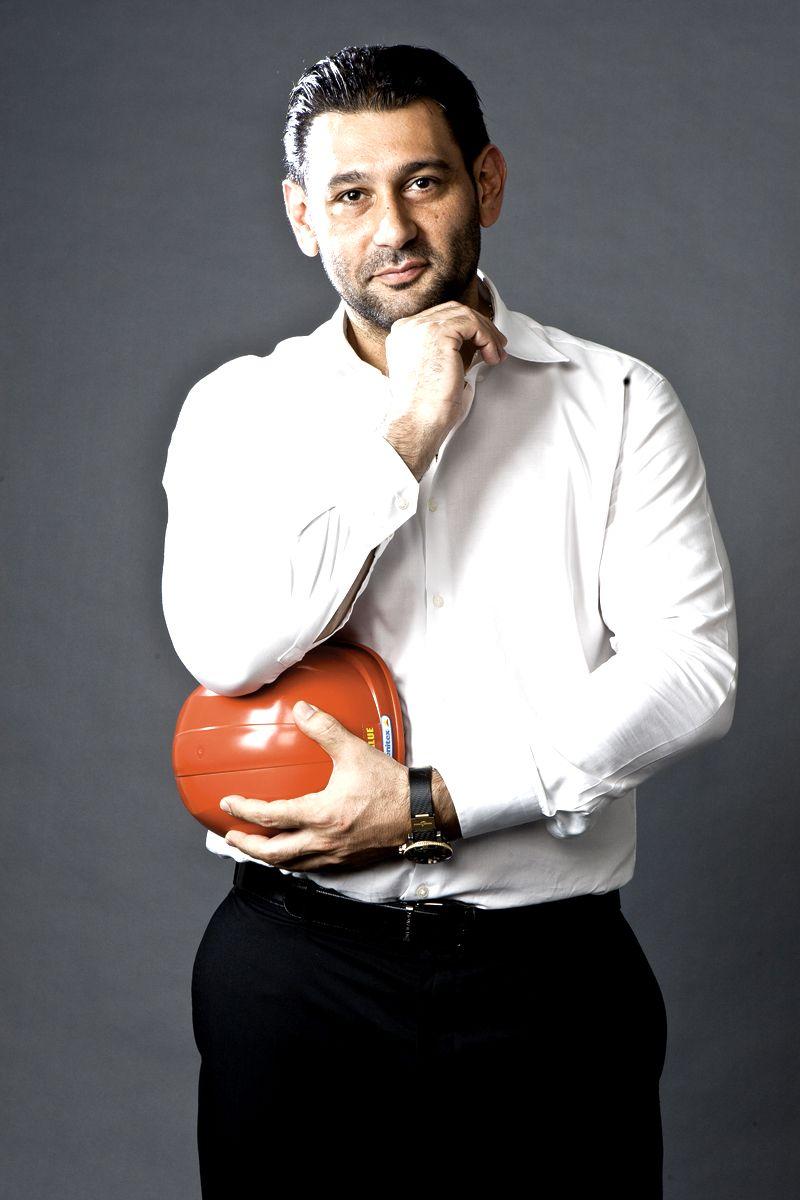
Since 2005 Andrew Elias has led Australian company Kele Contracting through the process of setting up shop in Dubai, spreading further afield and surviving the downturn. He chats to CW, to tell us how it all came about.
And your involvement with Kele? Why was it decided to establish this Australian firm in the UAE in 2005?
The UAE was experiencing a boom in the construction sector at the time of establishment in the UAE – in particular in Dubai – and I felt it was the ideal time to move into a new market with the Kele brand. I had established the company and ensured the execution and delivery of several major projects. I spearheaded Kele’s growth across the region and have now established the Kele brand in Abu Dhabi, Bahrain, Sharjah, KSA, and Lebanon.
There must have been a substantial difference between the Australian and UAE construction industries at this particular time?
In 2005 Australia was facing the post-Olympic downturn, so work was scarce and the market was leaving no room for expansion. Even during the height of the market, the value of work did not even come close to what Dubai had to offer during the same period. I still remember my touch down at Dubai airport; I looked out the window and felt pleasantly overwhelmed, as I could not personally count the number of cranes I saw.
Can you highlight some of Kele’s initial major achievements?
I think our major achievement would definitely be surviving the financial crisis that hit in 2007-2008, a credit to all companies who are still operating business as usual, almost five years on. A further achievement for Kele during this initial stage was in fact the successful completion of the six residential towers at Dubai Marina.
What were the main challenges and opportunities it faced at this initial stage?
Establishing ourselves in Dubai was quite a steep learning curve for Kele. We had been awarded our first project and we had to learn how to adjust to the climate, and the business culture, including the local culture – all of which is important and integral in doing business in the region.
We had our difficulties. But when the pressure is on to perform, you tend to learn things much quicker and never forget what you have learned. Several years on we are proud to say that we are a ‘local company’.
Article continued on next page…
How did Kele adapt to the boom period in Dubai in particular? What was its growth strategy and approach to tackling projects? What main markets was it focusing on?
Kele’s arrival in Dubai was greeted by a flurry of projects. So the business plan did not require Kele to think of other markets, but only chase the projects where we felt the clients were reputable and we felt we could confidently deliver.
We are a company diverse in construction experience and expertise, but found ourselves drawn to the major tower projects being built in Dubai.
What impact did the downturn have on Kele? Did it have to scale back or adapt its growth strategy at all? How would you say Kele has fared since the downturn? With a lot of focus on social infrastructure at the moment, is this an area where the company is looking to get involved?
The 2008 downturn affected everybody, including Kele. Kele managed to secure work during the downturn and actually scaled up and developed a portfolio. I also believe everything happens for a reason and the downturn opened our eyes to prospects in surrounding regions.
At the time we took a decision to take our business into new markets and learned that we should not become complacent in any market. Our expansion included countries such as KSA, Lebanon, and Qatar; and we currently have projects in KSA and Lebanon. It is clear to me that the bulk of our future work will be coming from Saudi Arabia as the market booms.
Is Kele looking to other markets, such as North Africa? Are the bulk of your projects within the UAE?
We are still exploring other regions such as Iraq, Algeria and Libya. I would suggest that Iraq would potentially be our next area of business, followed by Algeria. Iraq currently has $15 billion for infrastructure projects in the 2012 budget and the country’s rebuilding activity has required, so far, tens of billions of dollars in investment with USAID estimating total required expenditure at $150 billion.
The large number of projects already planned or underway will require huge amounts of contractors and construction expertise, and, therefore, there is huge potential for new companies entering the market. Iraq, in the past 12 months, has seen improved structure in the government’s ability to assign new projects with their respective budgets, which has created the right environment for investment opportunities in the real estate development, construction and building materials industries.
Can you update us on progress with your partnership with Al Suwaiket? What major projects have you been involved with? What are the particular challenges of this market compared to the UAE, for example?
Article continued on next page…
When Kele established the operations in the Kingdom of Saudi Arabia we formed a great strategic partnership with Al Suwaiket, who have a significant base in the Kingdom across a wide range of industries including establishing of the oil, gas and pipelines services division, educational services, legal consultations and the establishment of many industrial ventures.
Since our establishment in KSA we have commenced work on two projects: a housing project in Jeddah; and the Hilton Hotel in Riyadh. We are still actively tendering other projects in KSA including infrastructure, hospitals, schools and housing sectors. It has been quite challenging getting started in KSA, the first major decision is choosing the right partner and we are confident in our decision to join forces with Al Suwaiket. Following that is every contractor’s nightmare to obtain classification. I would say this would have to be one of the largest hurdles after incorporating the company. The only advice I could offer people coming to KSA is patience.
Can you tell us a bit about your work with Nakheel and some of the projects you are doing in conjunction with this developer?
Kele was awarded the contract to build a multi-storey car parking facility for Dragon Mart by real estate master developer Nakheel PJSC as well as the Dragon Mart Hotel, part of the 177,000m2 Dragon Mart Phase 2 development. Kele will be responsible for the full scope of the work on the projects awarded and delivering the projects turnkey which demonstrates Nakheel’s faith in us and our performance. Development of Dragon Mart’s facilities will add to our extensive portfolio of projects and is a step towards fostering a long term relationship with Nakheel.
Is this your first time working with Nakheel? What other major developers are you working with at the moment?
These two projects with Nakheel are our first with this large developer and we hope this will only be the beginning. Nakheel is one of Dubai’s anchor developers and even during times of adversity has managed to continue developing future projects. We are proud to be part of that success. We have had the pleasure to work with other major developers such as Mazaya, Hydra Properties and Enshaa, to name a few.
How would you describe the current state of the construction industry in the region? Do you see it picking up at the moment and stabilising? Do you remain optimistic about future growth?
The GCC has witnessed growth primarily in the infrastructure and residential sector of the real estate market and more notably for the low and medium income segment of the population. Governments and developers have, therefore, focused on building affordable and economic housing properties, to reflect the market’s requirement and the needs of local citizens. KSA, Qatar and UAE in particular have displayed remarkable development, due to government funding, for residential housing projects and to accommodate the rise in tourists and travelers to the country. Positive growth is thus expected in the region and the investment in construction projects will increase throughout 2012, boosting the supply of apartments and houses in the market. Regional government investments, spending and increase in the minimum wage have also structured this growing trend in the construction sector.
Article continued on next page…
What would you cite as the major challenges and difficulties facing contractors at the moment? Are payments from clients and low margins still a big issue?
The major problem we are facing in Dubai on new projects is not necessarily payment. Today’s developers are the serious ones and have the full intention and funding to push forward with new developments. The major issue is competition.
It is not uncommon to see between 10 to 20 companies tendering for the same project in Dubai. The boom in Dubai attracted some of the largest contractors from across the globe, who, even during the financial crisis, maintained an office in Dubai. This meant a strong presence of the company not only in the UAE, but also in the region, and increased the competition between contractors.
Green building and sustainability are major trends at the moment – how has Kele responded to this?
Kele Contracting LLC has embraced the challenge of constructing green buildings, which are energy efficient and resource and environmentally responsible.
Buildings have enormous potential for improvement – a major part of their consumed energy can be saved using sustainable design and intelligent building technology, with sustainable energy solutions.
We are committed to our environmental management system (EMS) based on ISO: 14001 principals through which all environmental impacts of our projects are addressed and managed in an ethical and responsible manner.
Our environmental framework has called for explicit measures of environmental performance.
The quality and efficiency of our service to our clients ensures the creation of high-quality buildings for the benefit of our clients and society at large. We, at Kele, aim to achieve this with as little impact on the environment as possible and hence considerable attention is given to the introduction of more sustainable construction practices.
Follow us on

