





Covid-19 may have just presented a way to address women’s decades-long fight for a more prosperous corporate career.
For the longest time, women have fought their way into corporate offices – overcoming systemic challenges that prevented them from getting hired. Now, another hurdle seems to be getting in the way for women to take leadership roles, and experts have been continuously debating how to address it.
For Cynthia Corby, a partner at Deloitte and a big advocate of women empowerment, the solution could be found in the way Covid-19 has changed the way people work.
“You have this huge talent pool, that has all these qualifications, all these abilities, but they still end up sitting at home, because maybe it’s work-life balance that they’re going to struggle with – that’s where we need to really take advantage of what Covid has taught us,” Corby told Arabian Business.
She noted that although more women are getting hired at entry-level globally, the number drops off at the point in which they are forced to choose between family and corporate life – a decision that men don’t usually have to make.
Talking about Deloitte’s “hybrid work model,” Corby emphasized how the pandemic has given employers a different perspective about productivity – allowing both men and women to perform well in the workplace, without sacrificing their personal lives.

Another women empowerment advocate, Helen Brand, the chief executive of UK-based Association of Chartered Certified Accountants (ACCA), echoed these comments, highlighting the new generation of workers – men or women – “want flexibility and creativity.”
“How you demonstrate your value isn’t about commuting long distances into an office every day, or even travelling the world every day,” she added.
These conversations about the future work present a “moment of opportunity” for organisations, Brand said, explaining how there is an increasing pressure for companies to be more progressive in their working models.
“If you speak to employers globally, there’s a huge war for talent at the moment,” she said, noting that more and more applicants are putting premium on obtaining “genuine flexibility and different ways of working.”
“Good business is about recruiting the best talent and understanding what form that talent comes in, so I think there will be a lot of pressure, even for those who have gone straight back to the old world – the new world will leave them behind ultimately,” the ACCA chief explained.

Although the impetus should come from companies to create more flexible opportunities for men and women, both Brand and Corby agree that government intervention is sometimes necessary to accelerate change.
“We’ve seen examples where the introduction of legislation had a very quick shift in impact… Sometimes when businesses have to worry about their reputation, I think that regulation and legislation can help to nudge, but it can’t be the entire solution,” ACCA’s Brand said.
The increasing consciousness around ESG also helps in encouraging the private sector to adopt more progressive policies, according to Deloitte’s Corby.
Investors are starting to look at ESG principles in deciding to support companies, which Corby said could be key in creating pressure for companies to change.
The importance of data in progressive policy making
The Deloitte executive also highlighted the importance of data and statistics in drawing a clear link between policy and impact.
“If you have data to show this is the population of women who are recruited, just like their male counterparts, and when we get at a certain stage, this is where the number drops off, and then you analyse why – this supports the need for change,” Corby explained.
She emphasised: “Data is extremely powerful to drive decision making.”
Both advocates have echoed calls for a more streamlined reporting process to properly lock in gender equality outcomes in the workplace, particularly when Covid-19 hit. Similar to the calls for stronger ESG reporting, governments and companies, they said will have a better understanding of the real issues faced by working women.
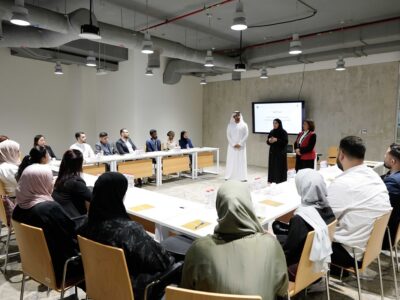
The comments come as ACCA, the UK-based professional network, kicked off a 12-month “Women in Finance” program in Dubai on Thursday. The program will consist of different initiatives – workshops, mentorship opportunities, and conferences – to support women who want to pursue careers in the traditionally men-dominated finance industry.
Follow us on

