




Walk into Boye Balogun’s office in Dubai and you won’t get any jargon or a 50-slide deck. You’ll get a straight answer.
“We help brands say what they want to say as simply as possible, and connect with the people who need to hear it,” he says.
That plain-spoken instinct now sits at the centre of one of the most ambitious soft-power projects in Africa: shaping how culture, creativity and technology can drive national and global brands from a Middle East base.
Chief Future Officer
Balogun is the founder and CEO of FutureTech, a new-age consultancy and media business that blends strategy, creativity and technology to help brands grow through culture and connection. What began a decade ago as a breakaway from big-network advertising has evolved into a practice trusted by governments and global brands alike.
Born in the UK to Nigerian parents, Balogun developed an early sense of cultural duality that now defines his global outlook, Balogun arrived in the UAE in 2012 to run regional digital at Mindshare, covering 15 markets just as mobile and programmatic advertising were shaking up the industry. In 2015 he wrote a business plan on an Emirates flight and decided to launch FutureTech. His early wins included HSBC and Uber which gave his new venture momentum. Expansion into South Africa, Singapore, Nigeria, KSA and Kenya soon followed.
Now an award-winning business, FutureTech has become a trusted partner for both global and regional brands. Under Balogun’s leadership, the company has helped emerging technology firms bridge into the Middle East and Africa, scaling their markets while guiding some of the region’s largest names from aviation giants to AI innovators through transformation, digital growth and market expansion.
Cultural diplomat
Today, one of his most influential clients is the Federal Republic of Nigeria, specifically the Ministry of Arts, Culture, Tourism and the Creative Economy. The brief: shape and carry the country’s soft-power narrative to the world, push cultural exports, and turn curiosity into inbound tourism and investment. The platform name is disarmingly simple – Nigeria Everywhere and is powered by FutureTech’s regional hub in Dubai, reflecting the city’s growing role as a global crossroads for culture and innovation.
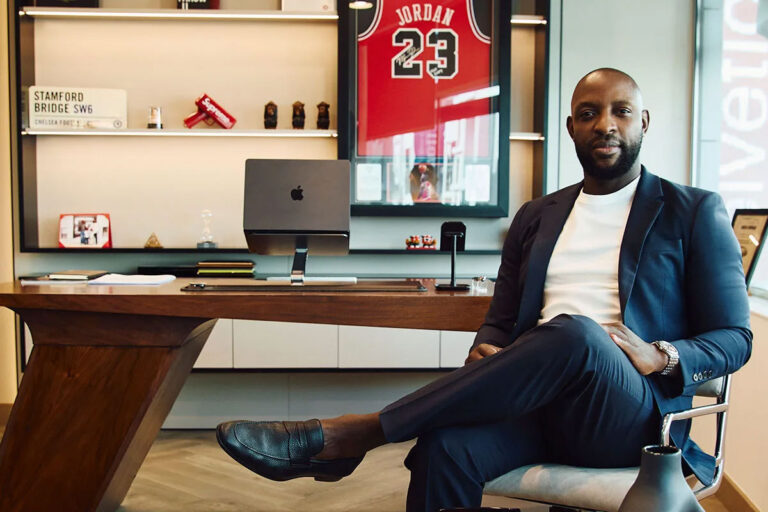
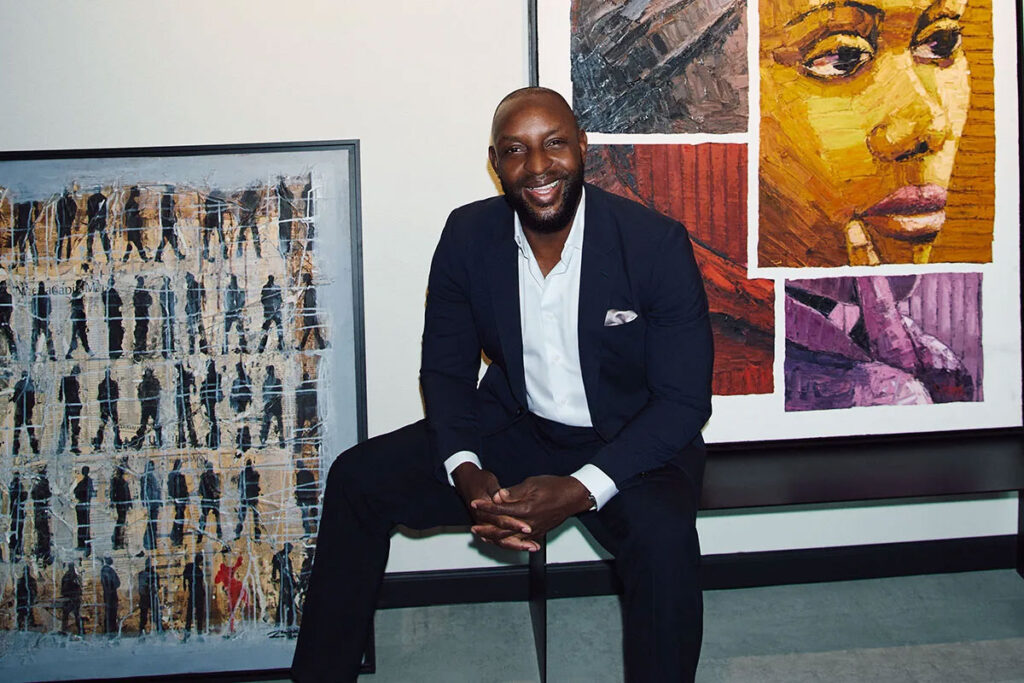
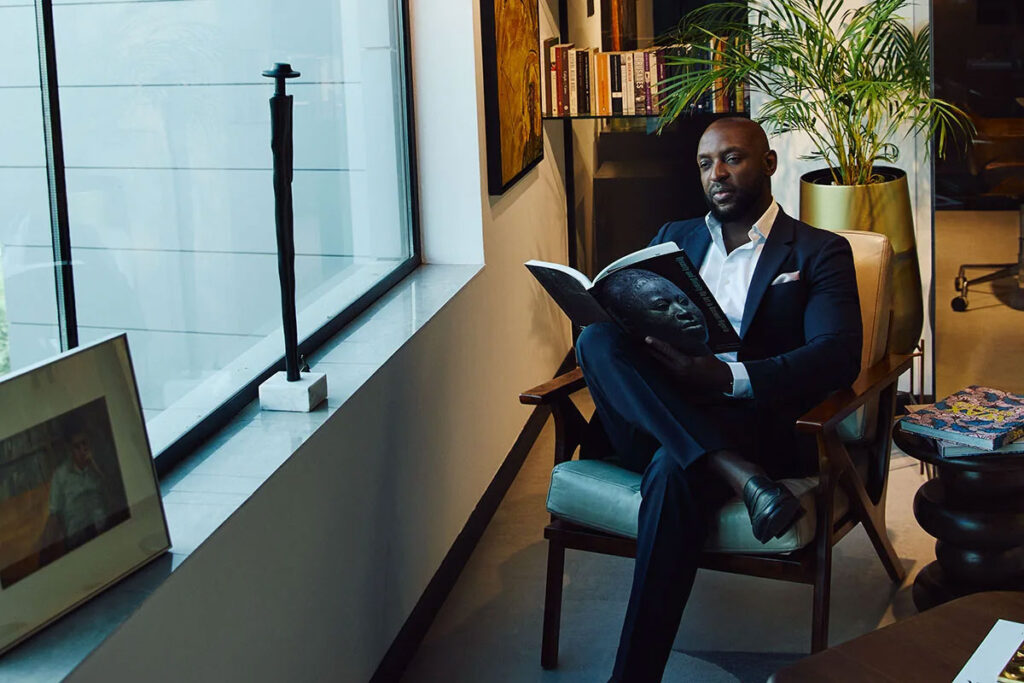
Balogun is proud of his Nigerian roots, and his main conference room is adorned with beautiful native paintings. (He also has a signed Michael Jordan jersey but that’s another story). The Nigeria brief was more than just media buying or a campaign. It needed a brand custodian to design and steward a nation-level story. One that could travel from the United Nations General Assembly to the World Economic Forum in Davos, from museum boards to music arenas, and from diaspora communities to first-time visitors. “Culture is the new oil,” Balogun says.
Tourism sits inside the ministry’s remit alongside Nollywood, Afrobeats, fashion, food, museums and creative industries. Balogun’s mandate was to connect these dots, build a coherent platform and take it global. He calls the role “cultural diplomacy” – part brand building, part convening, part lobbying for tourism. In the last 18 months he has met dozens of governmental stakeholders across several states to align on narrative and execution.
The campaign is also deeply personal and Balogun talks often about responsibility and his Nigerian roots. Representing a country of more than 200 million people gives him the opportunity to make an impact on a huge scale. You could genuinely call it a once-in-a-lifetime opportunity.
Dubai the bridge, FutureTech the connector
Why build a Nigerian tourism brand from Dubai rather than Abuja or Lagos? Balogun’s answer is pragmatic. Dubai is a working blueprint for destination branding and visitor experience. Think Brand Dubai. It is also a diverse tourist source market and an aviation hub with direct connectivity into Africa. Plus a neutral bridge for Middle East–Africa partnerships.
That bridge is already tangible. Balogun supported the Africa engagement at the inaugural Africa–UAE Tourism Summit, helping strengthen creative and tourism ties between the two regions. It marked the first time the continent was invited as a united delegation rather than a series of bilateral meetings. The firm’s “second act,” as Balogun frames it, is to professionalise this bridge: structured market entry and scaling, and brand-to-brand collaborations running both ways – GCC investment and visitors into Africa, African creators and brands into the GCC.
Agile by design
FutureTech is intentionally lean, operating as a specialist team built around top regional talent, “the smartest people in each market,” Balogun says, supported by a network of expert collaborators. The model offers agility and white glove service while partnering seamlessly with major networks and brands. “In today’s world, media decisions happen by the second,” he notes. “AI gives us the data; instinct gives us direction. Our strength is combining speed, focus and collaboration.” This agility extends to how the team stays current. Balogun is a voracious consumer of media and a very frequent traveller. The father-of-three also listens to the younger generation. “Kids speak a different language,” he says. “Ask them what they’re watching and buying.”
Speaking about the younger generation Balogun is excited about what AI can do, but also cautious. He loves the speed, scale and sharper targeting. Let the machines do the heavy lifting. Keep ownership with people. He wrote a post on LinkedIn recently that warned “If we don’t teach our kids how to be human, AI will gladly do it for us.” Balogun explained that while we spend a lot of time talking about AI at work, “the real revolution is happening at home; in how we parent, teach, and prepare our children for a world built on intelligence, both human and artificial.” His conclusion? “Parenting in the age of AI isn’t about keeping up with technology. It’s about staying grounded in what makes us human.”
Creators over influencers
Balogun has been on the influencer curve long enough to see the edges fray. FutureTech built an early programmatic influencer offering five years ago, but he insists the real value sits with creators who make and own things. He predicts consolidation: creators clustering into studios with owned media and brands, more like mini broadcasters than solo accounts. He likes unlikely collisions – the streamer who partners with a footballer, the musician who drops into an esports tournament – because they reach young audiences where TV no longer can.
For Nigeria Everywhere that matters. Nollywood and Afrobeats are not “influencer content,” they are cultural industries. The job is to platform them, remove friction and connect them to global stages and sponsors without diluting authenticity. “Relevance and credibility over reach,” he says. “People are bored of flogging.”
His love of sport fuels this thinking. A Jordan No. 23 jersey hangs in the background of his office photos. Not fanboy memorabilia, he insists, but a reminder that relentless performance and intelligent brand building can leap from courts to commerce. “Excellence is excellence,” he says. “You bring it into the region and you build on it.”
Cultural landmark
As our interview drew to a close, and we chatted about his admiration for the three Michaels (Jordan, Jackson and Tyson), Balogun dropped an exclusive new story on our laps. A major new cultural and music venue celebrating African – and particularly Nigerian creativity – is being developed in the UAE. The 10,000-capacity destination aims to showcase the continent’s talent across music, art, food, and design, positioning Nigeria at the heart of global cultural exchange.
The project, part of the Destination 2030: Nigeria Everywhere initiative, is being developed through a public-private partnership (PPP) and discussions are underway with UAE government entities and partners to bring the project to life.
Beyond the main performance arena, the development will feature an exhibition hall, a Nigerian culinary zone, a retail gallery for African design, and a multidisciplinary artisan academy to nurture emerging creatives across fashion, food, music and storytelling.
The design aims to blend cultural symbolism with cutting-edge modernity, creating a landmark that embodies collaboration between regions.
“This venue represents more than just architecture – it’s a cultural bridge between Africa and the Middle East,” Balogun says. “Nigeria has become a global creative powerhouse, and the UAE has emerged as a leader in cultural innovation. This space will host everything from intimate exhibitions to large-scale headline performances – where legends and emerging voices perform side by side. It’s powered by Nigeria, but for Africa.” True to his word – a cultural builder.
This piece first appeared as the cover story of CEO Middle East in the Mid-Month Issue, November 2025.
Follow us on

