





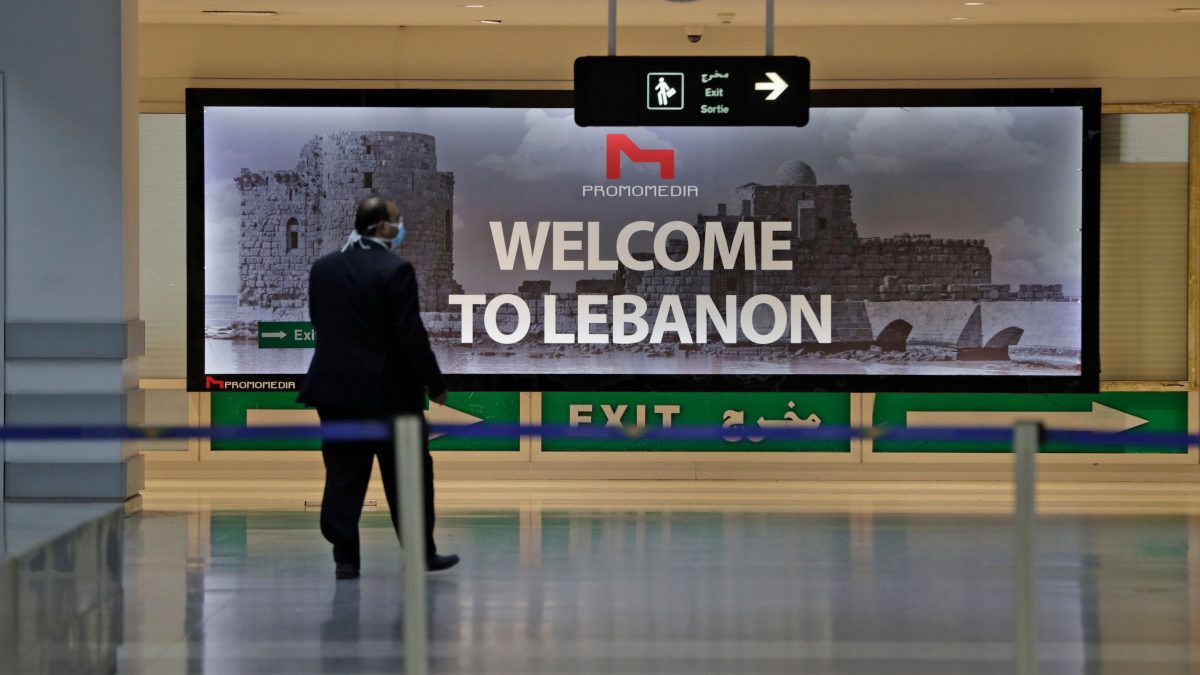
The number of tourist arrivals in Lebanon fell to below 200,000 in the first half of 2020, compared to more than 923,000 in the same period last year as the coronavirus pandemic forced the main airport to close.
The industry has had to deal with a deep economic crisis since the beginning of the year, in addition to the effects of the Covid-19 pandemic and the Beirut Port explosion in August.
The number of tourists were slashed to 199,722 in H1, compared to 923,820 tourists posted in the first half of 2019, following an increase of 8.3 percent in the same period of the previous year, according to latest figures released by the Ministry of Tourism.
The number of incoming visitors to Lebanon reached their lowest monthly level on record in March due to the closure of the airport starting on March 18.
While the tourism sector posted an overall negative performance throughout the first half of the year, the second quarter was hit hardest as a coronavirus-related lockdown was imposed on the country.
Beirut International Airport activity was a mirror image with the total number of passengers recorded falling to jusrt below two million in the first 10 months of 2020, compared to 7.7 million passengers in the same period of 2019.
The number of aircraft movements fell by 65.1 percent year-on-year while total freight handled by the airport edged down by 31.2 percent.
.png?wyYoMJtd)
Tourism is one of the main pillars of the Lebanese economy, accounting for 18 percent of gross domestic product in 2018, according to a study by Blominvest, one of Lebanon’s biggest banks.
Hundreds of tourism-related businesses have closed in the past 12 months, while 70,000 workers have been laid off, according to Pierre Achkar, president of the Syndicate of Hotels Owners in Lebanon.
As a result, tourism receipts in Lebanon totalled $1.1 billion in the first quarter of 2020, representing a 42.4 percent decrease compared to the same quarter of 2019 and a 32 percent decrease from the previous quarter, according to central bank’s latest figures.
.png?O0tKt9Br)
Tourism receipts reached their lowest level in the first three months of the year since the first quarter of 2005.
Four- and five-star hotels registered an average occupancy of 13 percent over the first eight months of 2020, against an average of 72 percent over 2019, according to Ernst & Young.
Follow us on

