



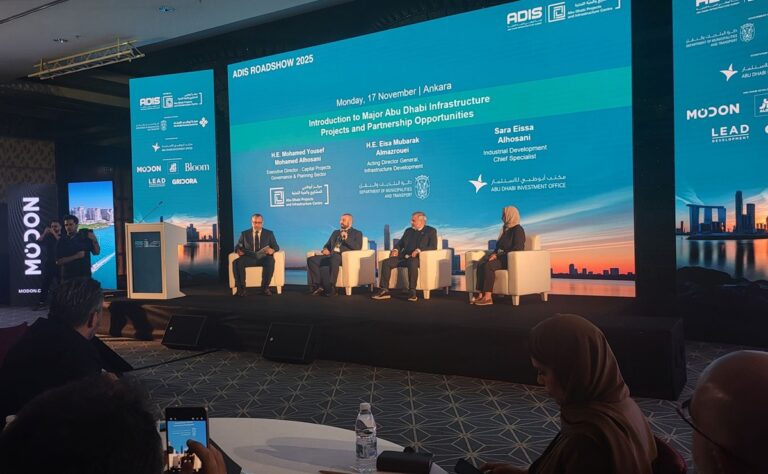
Abu Dhabi has showcased more than $55bn worth of major infrastructure projects to Turkish companies at the UAE–Türkiye session of the international roadshow for the Abu Dhabi Infrastructure Summit (ADIS).
The session highlighted extensive partnership opportunities for Turkish firms across modular construction, transport and complex engineering developments, as Abu Dhabi positions itself as one of the region’s most forward-looking cities.
Mohammed Yousef Al Hosani, Executive Director at the Abu Dhabi Projects and Infrastructure Centre, said the emirate is focused not only on delivering new assets but also on creating sustainable, efficient communities that support long-term prosperity.
Abu Dhabi targets UAE–Türkiye investments
The Centre currently oversees more than 600 capital projects, with infrastructure designed to enhance quality of life, diversify the economy and strengthen environmental resilience.
He highlighted the essential role of public-private partnerships (PPPs) in delivering this pipeline and said the UAE capital plans to use modular construction for 40,000 housing units over five years, creating significant opportunities for Turkish expertise.
Eisa Mubarak Al Mazrouei, Acting Executive Director at the Department of Municipalities and Transport, said Abu Dhabi aims to become “the world’s most liveable city”, already ranking fifth globally in the IMD Smart Cities Index.
The UAE also ranks first worldwide in the use of AI applications.
“With more than 190 nationalities living in the country, demand for advanced urban services continues to grow; Abu Dhabi’s liveability score has increased from 63% in 2023 to 81% last year,” Al Mazrouei said, highlighting that over 40 years of UAE–Türkiye cooperation in construction see Turkish firms now having substantial opportunities in roads, bridges, tunnels, integrated transport systems, autonomous mobility, rail and metro projects.
From an investment and industrial perspective, the session also set out emirate’s wider economic ambitions.
Abu Dhabi Investment Office strategy
Sara Issa Al Hosani from the Abu Dhabi Investment Office said the emirate is building an export-driven industrial economy supported by advanced manufacturing, logistics and global trade links.
“Abu Dhabi aims for the industrial sector to contribute AED172bn by 2031, supported by incentives such as 100% foreign ownership, discounted land leases and reduced energy costs,” she said.
The AED172bn ($46.8bn) target is supported by incentives including 100 per cent foreign ownership, discounted land leases and reduced energy costs, strengthening the city’s appeal as a base for global and regional players.
Al Hosani added that the UAE is negotiating 27 Comprehensive Economic Partnership Agreements, giving businesses in the Emirate preferential access to 2.5 billion consumers.
In 2024, she added, AED48bn ($13.1bn) was directed to approved suppliers under the national In-Country Value (ICV) programme, strengthening local supply chains and creating wide opportunities for international companies to participate in government tenders.
Follow us on

