


Climate change, increasing global polarity, the challenge of artificial intelligence to employment and jobs, and the evolving nature of leadership. Oh and there’s a pandemic.
In 2021 it’s a complicated world out there and so how does an organisation adapt to this new landscape, especially when you are the ones supposed to be advising others on how to evolve and thrive.
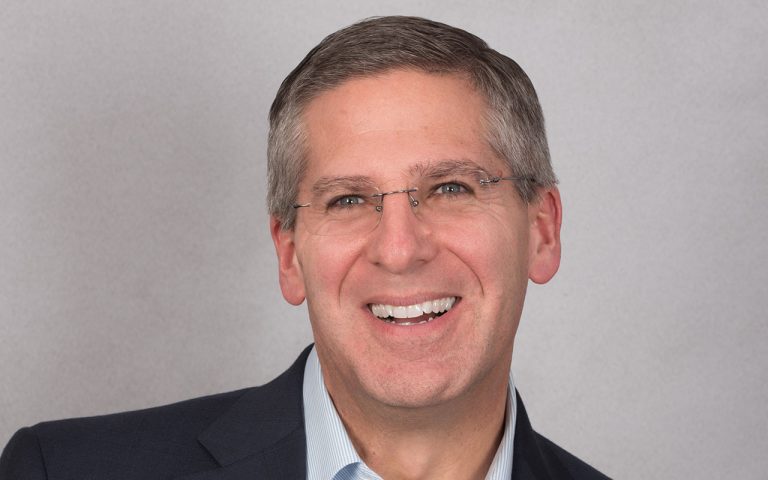
At consulting giant PwC they’ve reacted by launching The New Equation, a huge global strategy aimed at tackling each of the challenges head on. Bob Moritz, the global chairman of PwC, speaks with Arabian Business to unpack this masterplan of masterplans.
So to open, can you briefly give us an overview of The New Equation, how long have you been working on it and why, most importantly, was it necessary?
So first and foremost, as we look at the world, the mega trends that are evolving and the implications from it, it’s clear that today’s system is not fit for purpose going forward. You identified a number of different challenges [in your introduction], those are symptoms of that system actually potentially failing us as a society and a world.
When you step away back, what we see are two fundamental themes that business leaders, political leaders, government leaders, community leaders have to deal with.
First is the issue of enhanced trust, the entire system needs more trust within it for it to operate effectively and efficiently, especially with those challenges that you talked about.
The second piece is we can’t be focussed on just programmes and talk, we actually have to be focussed more on sustained outcomes, outcomes that benefit the stakeholders that are interested in what the implications of those themes that you identified at the start.
And those two themes are interdependent, they’re not siloed in any way, shape, or form. You need to actually demonstrate the sustained outcomes before you are more trusted. If you are more trusted, you probably have had the confidence instilled in you by others that they believe you, in fact, will deliver on those status sustained outcomes.
 PwC has had a presence in the Middle East for 40 years and currently operates across 12 countries in the region, employing around 6,000 people.
So as we look at those two fundamental needs, the third component piece is what PwC is doing about it, which is we have to build our capabilities and scale sufficiently enough all of those competencies to come together in a community of solvers, to solve for those problems, and solve for those opportunities, (ie) the enhanced trust and the sustained outcomes.
So at PwC, we’re arguing that by bringing all of those competencies together through the humanity that we have, and the IP that’s in people’s heads coupled with technology, empowerment that we are able to position to uniquely advise and provide the assurance necessary to bring that trust to life.
You talk about building trust? Where has that trust gap come from, is it inherent in the world right now with the increasing polarisation we see? And why is it so important to tackle that?
Trust is just fundamental to actually getting things done as you look at things in the marketplace, things with the politics, things in various countries and communities that’s going on right now.
But let’s go back to some of those mega trends I referred to earlier. If you combine technology with the fact that the shifting demographics of the world have caused the asymmetry of the haves and have nots, three fundamental things have happened.
First, there’s a lot more transparency. The world sees a lot of what’s going on now through social media. Something might have happened in Africa 10 years ago and you would have never heard about it, or maybe you heard about it a month later. Today, there’s a picture taken, and it’s instantaneously broadcast around the world.
The second point is the number of stakeholders that now have that voice. Through social media, and otherwise, the world has become judge and jury, not necessarily the direct individuals. And likewise, what you’ve got is polarisation, because you do have ‘the haves’ and ‘the have nots’. So the demands from the stakeholders are increasing, and, by the way, they’re not aligned.
So as a result, everyone brings a degree of skepticism, and therefore, lack of trust to what you’re doing, but most importantly, why you’re doing it. And they’re not seeing the sustained outcomes that actually benefit the world in the way that they believe it should come to life. So it’s no surprise that we’re getting this deterioration of trust.
To your second point, enhancing that is so much more important. We look around the world today, how do you get stuff done? For the politician, it’s how do I get elected? I’ve got to demonstrate that I can get to some outcomes and do something, not just talk about it. To the CEOs, if I’m going to actually attract investment, consumption or even employment, I’ve got to be more trusted, that I’m actually delivering against the goods versus the expectations those groups have.
Of all the things you are trying to achieve with the New Equation isn’t this – trust – the hardest one to tackle?
I don’t think it’s impossible. But this is where these two things become so much more interconnected.
So let’s take a business today. A business today has historically been challenged by delivering net income and delivering the expectations you get that’s against that stakeholder group called the shareholder. As we move and shift towards stakeholder capitalism, it’s clear that the activism that historically has been resting within the investor group is not just limited to that anymore.
The employees are becoming activists, the consumers are becoming activists. Oh, by the way, the citizens in the locations where these places are actually housed, are becoming activists in terms of demanding more, in terms of what are you are doing on climate? Or what are you doing around social injustice? Or what are you doing around the issues of fair pay, for example.
So in order to be more trusted by those groups, you’ve got to deliver the goods. This is why that sustained outcome piece becomes so more important.
PwC global strategy
- Consultancy giant PwC has vowed to double its staffing numbers in the Middle East over the next five years as part of the company’s global strategy.
- Billed as ‘The New Equation’, the strategy is designed to respond to the fundamental changes in the world, including technological disruption, climate change, fractured geopolitics and the continuing impact of the global coronavirus pandemic.
- PwC has had a presence in the Middle East for 40 years and currently operates across 12 countries in the region, employing around 6,000 people.
- Plans to hire a further 6,000 people in the region forms part of a $12bn investment globally by the company to create over 100,000 new jobs over the preceding five-year period.
It is one of six key areas the company is set to focus on, with further objectives including:
- Further invest in digital capabilities through strategic acquisitions, emerging technologies, and establishing additional Experience Centres in the region, to complement existing state-of-the-art hub for innovation, co-creation and creativity.
- Create an ESG Centre of Excellence in the region focused on energy transition and the broader ESG agenda.
- Hire over 500 new graduates each year, and provide them with training and qualifications that sets them up for a strong career in the region. Doubling down on an existing commitment to promote inclusion and diversity, 50 percent will be female and 80 percent Arabic speakers.
- Commit to achieving net zero greenhouse gas emissions by 2030, which involves transforming the company’s business model to decarbonise the value chain.
- Continue to upskill its people to build a community of solvers, with the right skills to deliver solutions that are human-led and tech powered.
Follow us on

